Hey there! If you’re running a facility, HVAC system, or industrial operation, you’ve probably stared at your centrifugal fan’s energy bill and wondered—am I overpaying for that thing? As a centrifugal fan supplier, I get this question every single week, and it’s not just a random “is this expensive?” thought. Calculating power usage for a centrifugal fan isn’t rocket science, but if you’re guessing, you’re almost definitely leaving money on the table. Let me break this down like I’d chat with a fellow shop owner—no jargon overload, just straight facts. Centrifugal Fan

First off, let’s clear up what a centrifugal fan actually does (for the folks who might not be gearheads like us). Unlike axial fans that push air straight through, centrifugal fans spin blades around a central hub, pulling air in the side and flinging it out the discharge—they’re the workhorses for moving heavy air loads, like in warehouses, manufacturing lines, or your building’s HVAC unit. Their power draw doesn’t just depend on size, either—there’s a math formula that ties to what you’re actually using the fan for, which is where most people mess up.
Let’s start with the basics: the core formula for centrifugal fan power. I know, formulas sound scary, but stick with me. The formula you’ll want to memorize (or save this page, let’s be real) is Brake Horsepower (BHP) = (Flow Rate × Static Pressure) / (6356 × Fan Efficiency). Wait, what’s all that stuff? Let’s translate it to plain English:
- Flow Rate: That’s how much air the fan moves, measured in Cubic Feet per Minute (CFM). If you’re not sure, that’s the volume of air going through the fan every minute—like, if your ductwork is 1000 CFM, that’s your number here.
- Static Pressure: This is the resistance the fan has to push against, right? Duct friction, filters, grilles—all those add up. It’s measured in Inches of Water Gauge (in WG), basically how hard the fan has to work to push air through those barriers.
- 6356 is just a constant to convert units so the math works out (don’t stress about why it’s that number, just use it).
- Fan Efficiency: This is the fan’s “smartness”—how much of the motor’s energy actually turns into moving air, not just wasted as heat or noise. Good centrifugal fans hit 80% efficiency or higher; cheap ones might be 50% and up, which is a huge difference.
Wait, hold on—there’s a catch here. The BHP we just calculated is the power going into the fan itself, but the motor needs a bit extra, right? That’s where Motor Efficiency comes in. So to get the Actual Power Consumption (in Kilowatts, since that’s how utility companies bill you), you convert BHP to kW (1 HP = 0.7457 kW) then divide by motor efficiency. Let me give you a real example to make this click.
Say you’ve got a standard centrifugal fan for a small warehouse: it moves 4000 CFM, has a static pressure of 2 in WG, and the fan is 75% efficient. Let’s plug in: BHP = (4000 × 2) / (6356 × 0.75) = 8000 / 4767 ≈ 1.68 HP. Now, if the motor here is 90% efficient, actual power draw is (1.68 × 0.7457) / 0.9 ≈ ~1.4 kW. Run that fan 24/7 for a month (720 hours) at $0.12 per kWh, and that’s 1.4 × 720 × 0.12 = ~$120 per month. But if you’d used a lower-efficiency fan (60%), that BHP would jump to (8000 / (6356 × 0.6)) ≈ 2.1 HP, so power is ~1.8 kW, costing ~$155 a month—you just spent an extra $35 a month for a cheaper fan that wastes energy. That’s the kind of number that adds up fast for larger facilities.
Now, here’s where a lot of people go wrong: they use wrong values for flow rate or static pressure. You can’t just guess CFM—if your ductwork has a leak, that’s not your actual flow. And static pressure? If you forget to clean your filters (which add resistance), that static pressure goes up, so your power draw spikes without you noticing. I’ve had a customer who thought their fan was broken, turns out they didn’t change their air filters for 6 months—static pressure jumped from 2.5 in WG to 4 in WG, and their power bill went up 40% overnight. Oops.
Another big factor: fan affinity laws. These are the rules that explain how changing fan speed affects power, and they’re game-changers if you want to save cash. The laws say: if you cut the fan speed by half, power usage drops by 87.5%—that’s not a typo, it’s a cube law. Let’s use that same warehouse example: if you can run the fan at 80% speed instead of full speed, flow rate drops to 3200 CFM, but power is (0.8)³ = 51.2% of original. So instead of $120 a month, it’s ~$61. That’s half the cost for just slowing down the fan a bit. A lot of facilities use variable frequency drives (VFDs) for this, right? VFDs let you adjust fan speed to match actual air needs, not run at full blast 24/7. As a centrifugal fan supplier, I always tell customers: a VFD on a high-efficiency fan will pay for itself in 6-12 months with energy savings.
Wait, what about when you’re sizing a new centrifugal fan? Don’t oversize it. I see this all the time—people pick a fan that’s way too big “just in case,” but that means it’s running at a low load, which is terrible for efficiency. A fan that’s sized for your exact flow and pressure will run at peak efficiency, not waste energy spinning extra blades. For example, a fan oversized by 20% might only be 50% efficient at part load, vs. 80% at full load. That’s a 30% difference in power usage—huge over a year.
Let’s also talk about real-world vs. theoretical numbers. The formula I gave is the ideal case, but there are losses: belt drives (if your fan uses belts, not direct drive), bearing friction, duct losses, motor inefficiencies. If your fan is belt-driven, you’ve got to add the belt efficiency to the mix—usually around 95% for good belts. So if you forgot that, your actual power draw will be 5% higher than your BHP calculation. Direct drive fans skip that loss, so they’re usually 2-3% more efficient, not to mention less maintenance. That’s another selling point I push with customers—direct drive centrifugal fans save energy long-term, even if the upfront cost is a bit higher.
Now, let’s test a larger, industrial example to scale this up. A manufacturing plant has a centrifugal fan for dust collection: 20,000 CFM, 5 in WG static pressure, 82% fan efficiency, direct drive, 93% motor efficiency. BHP = (20,000 × 5) / (6356 × 0.82) = 100,000 / 5211 ≈ 19.2 HP. Convert to kW: 19.2 × 0.7457 ≈ 14.3 kW. Multiply by 8760 hours a year (full time industrial) at $0.10/kWh: 14.3 × 8760 × 0.10 = ~$12,527 a year. If that plant had used a belt-driven fan (95% belt efficiency), that would add ~5% to power, so ~$13,153 a year—over $600 extra, for a small difference in fan type.
Wait, what about calculating for a system that has multiple fans? No, the formula still works—you just calculate each fan separately. If you’ve got two small centrifugal fans running the same duct zone, add their individual CFM and static pressure, but no, each fan’s power is based on its own flow and pressure. Easy peasy.
Now, common myths to bust: Myth 1: “Bigger fan = more power, so I should get the smallest possible.” No—too small a fan will have to work way harder, run at max efficiency but still not meet your needs, leading to higher static pressure and wasted power. Myth 2: “VFDs always save money.” Only if you’re actually using them to adjust speed—if you just set it and forget it, you’re not saving a thing. Myth 3: “Static pressure is just duct size.” No, it’s every obstacle in the path—filters, dampers, elbows, grilles. Even a tight elbow can add 0.5 in WG, which spikes your power.
So, if you’re trying to lower your centrifugal fan power usage, here’s a quick checklist: 1. Measure your actual CFM and static pressure (not guess!). 2. Make sure your fan is sized correctly, not oversized. 3. Upgrade to a high-efficiency fan (80%+). 4. Add a VFD if you’re adjusting fan speed for varying needs. 5. Clean filters and ductwork regularly to cut static pressure. 6. Use direct drive instead of belt drive to skip belt losses.
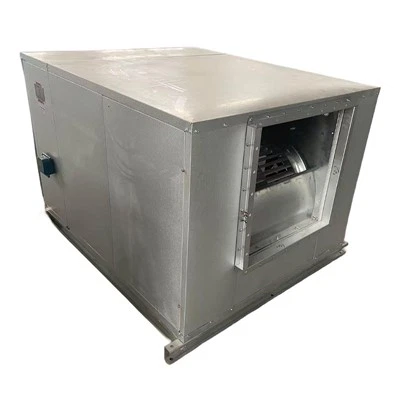
At the end of the day, calculating fan power doesn’t have to be a headache. The formula is straightforward, the examples make sense, and there are easy fixes to cut your usage. If you’re not sure where to start—whether you need to recalculate your current fan’s power, size a new centrifugal fan, or tweak your setup to save cash—hit us up. We’re centrifugal fan specialists, not just salespeople, so we’ll walk through your specific needs, no pressure, no fluff. Let’s chat through what you’re working on, and figure out a way to keep your costs low and your system running smooth.
Axial Fan References:
- ASHRAE Handbook – HVAC Systems and Equipment, American Society of Heating, Refrigerating and Air-Conditioning Engineers.
- Fan Application Engineering, AMCA International (Air Movement and Control Association).
- “Centrifugal Fan Power Calculations and Efficiency,” U.S. Department of Energy Industrial Technologies Program.
- HVAC Fan Selection and Energy Use Guidelines, National Fire Protection Association.
Anhui Zhongxin Sanyuan Ventilation Equipment Co., Ltd.
We are one of the most professional centrifugal fan manufacturers and suppliers in China, featured by quality products and good price. Please rest assured to buy customized centrifugal fan made in China here from our factory. Also, pricelist is available.
Address: No. 1 Yuanxing Road, North District of Guangde Economic Development Zone, Guangde City, Xuancheng City, Anhui Province, China
E-mail: newsanyan@gmail.com
WebSite: https://www.newsanyan.com/
