Hey there, ever wondered why a high-pressure blower doesn’t just blast air randomly like a regular shop vac, but actually moves that air through tight, demanding spaces—like in industrial wastewater treatment, pneumatic conveying, or even dust extraction on construction sites? The secret isn’t just the blower’s impeller spinning fast; it’s the unsung hero hiding right after the impeller: the diffuser. As someone who’s been selling high-pressure blowers for over a decade (I work with companies that need reliable air movement, and trust me, I’ve heard all the “why does this part matter?” questions), I can tell you—skip understanding the diffuser, and you’re gonna deal with blown motors, wasted energy, and way too many service calls. Let’s break this down like we’re geeking out over blower tech, no stuffy engineering jargon, I promise. High-pressure Blower

First, let’s set the scene: When your blower’s impeller spins, it’s not just spinning air—it’s flinging it outward fast, right? Like when you spin a bucket of water over your head, the water gets pushed to the edges of the bucket. That air exiting the impeller has two things going for it: it’s moving reeeeally fast (we call that velocity energy) and it’s got a bit of pressure, but most of its “oomph” is speed. Problem is, if you just channel that fast air straight into a pipe or a duct, two bad things happen. One, all that high-speed air hits the wall of the duct or pipe and gets turbulent—kind of like when you pour milk into a glass too fast and it splatters everywhere instead of flowing smooth. Turbulence wastes energy, which means your blower has to work harder just to move the same amount of air, driving up your electricity bill. Two, that fast-moving air doesn’t have enough static pressure to push through long pipes or thick material (like moving gravel through a pneumatic line, or air through 100 feet of duct with a bunch of elbows). You need to turn that velocity energy into usable static pressure, and that’s exactly what the diffuser does.
Wait, what’s a diffuser, exactly? It’s not some fancy mystery part—it’s a ring (or multiple rings, depending on the blower type) with curved little vanes inside, right after the impeller, before the air hits the discharge outlet. The vanes are shaped to slow down that fast-exiting air super gradually, not abruptly. Here’s the key physics, simplified: when a fluid (air counts here, since it’s a gas that acts like a fluid for blower purposes) slows down smoothly, its pressure goes up. That’s Bernoulli’s principle, yeah, but you don’t need to memorize the formula—just think of it like tapping the brakes gently in a car: if you brake hard, you skid and waste energy, but brake slow, you just slow down and keep moving forward with control. That’s the diffuser in a nutshell: a controlled brake for high-speed air, turning velocity into pressure without wasting all that energy.
Let’s make this real with a example. Last month, I talked to a food processing plant guy who was using a cheap high-pressure blower to move flour through a pneumatic conveying system. He was complaining that the blower was blowing out 20% more energy than it should, and half the flour was getting stuck in the pipes. Turns out, their old blower didn’t have a proper diffuser—just a straight pipe sticking out behind the impeller. The fast air from the impeller was hitting the straight pipe wall, getting turbulent, so it couldn’t push the flour all the way, plus all that turbulence made the blower work way harder. We swapped in a blower with a properly designed diffuser, and his energy bill dropped by 18% in the first month, and his pipe clogs stopped. That’s not a fluke—diffusers do that heavy lifting for you.
Now, not all diffusers are created equal, and that’s where experience (aka being a supplier who’s seen it all) matters. Some cheap blowers have a “diffuser” that’s just a generic ring with flat vanes, which doesn’t slow the air smoothly. Proper diffuser design depends on a few things: the speed of the impeller, the size of the blower, what the air is moving through, and even if the air has tiny particles (like flour dust or wood chips, which is super common in blower applications). For example, if you’re moving dusty air, the diffuser vanes can’t be too narrow—dust will get stuck and clog the blower. So we design our diffusers with wider vanes and smooth curves that prevent buildup, so you don’t have to take the blower apart every week to clean it.
Another big role of the diffuser: reducing noise and vibration. I know, no one talks about noise when talking blower parts, but if you’ve ever stood next to a blower that sounds like a jet engine taking off, you’ll get it. All that turbulent, fast-moving air creates pressure fluctuations that turn into noise and make the whole blower shake. The diffuser tames that air flow, smoothing out the pressure changes, so your blower runs quieter and lasts longer. That same food processing plant guy I mentioned earlier? He also said his noise level dropped by 12 decibels after we swapped the blower—his workers stopped complaining about headaches from the blower’s roar. Win-win, right?
Wait, let’s clear up a common myth I hear all the time: “Can’t I just adjust the blower speed instead of getting a diffuser?” No, not really. If you spin the impeller faster to get more pressure, you just end up with even faster air exiting the impeller, which means more turbulence, more energy waste, more noise, and sooner or later, your motor burns out because it’s working too hard. The diffuser is the efficient way to convert that speed into pressure without cranking up the impeller. Think of it like a bike: if you’re going fast downhill, you don’t just push harder on the pedals (crank up the impeller) to get up the hill—you use your gears, which change the way your pedal motion translates to forward speed. The diffuser is your blower’s gear, turning speed into usable pressure efficiently.
Now, let’s talk about when the diffuser really shines—different blower applications. For example, in wastewater treatment plants, blowers are used to pump air into aeration tanks to break down sewage. Those tanks need consistent, high-pressure air over hundreds of feet of pipe. Without a good diffuser, the air pressure would drop off so much at the end of the pipe that the aeration would be uneven, leading to bad sewage treatment. In pneumatic conveying, moving things like plastic pellets, grain, or even food powder requires enough pressure to push the material through long lines—again, the diffuser’s pressure conversion is make-or-break. Even in dust extraction systems for woodworking shops, the diffuser slows the fast air so it can pick up dust and carry it to the filter, instead of just blowing it around the shop.
I’ve also seen what happens when a diffuser fails. Last year, a manufacturing plant had a blower that was acting up—pressure was dropping, energy bills were sky high, and the blower was making a weird rattling noise. We checked the diffuser, and it was cracked. Turns out, the plant had let dust build up on the diffuser over time, which threw the air flow off, causing pressure fluctuations that cracked the vanes. We replaced the diffuser, cleaned the blower, and it was good as new. The lesson here: the diffuser isn’t a “set it and forget it” part, but it’s way easier to maintain than fixing a blown motor or a clogged pipe.
As someone who supplies high-pressure blowers, I can tell you that the diffuser is one of the most underrated parts of the entire system. A blower with a good diffuser is more efficient, quieter, longer-lasting, and will save you way more money in the long run than a cheap blower without a proper diffuser. I’ve had customers come to me after buying a cheap blower from a big box supplier, complaining about all the issues we talked about, and once they upgrade to a blower with a properly designed diffuser, they never go back. The cost savings on electricity alone usually pay for the blower in a year or less.
Look, I get it—when you’re buying a blower, you’re focused on CFM (cubic feet per minute) and pressure numbers, right? Those are the specs that show up on the box. But the diffuser is the part that makes those specs actually work in real life. A blower that says it can do 500 CFM at 10 PSI is useless if the diffuser is bad, because you’ll only get 350 CFM at 6 PSI by the time the air reaches your application. The diffuser is the bridge between the impeller’s raw speed and the usable air you need for your job.
So, if you’re in the market for a high-pressure blower, or you’re dealing with issues like high energy bills, frequent clogs, noisy blowers, or inconsistent air pressure, don’t just look at the impeller size or the motor horsepower. Ask about the diffuser. Ask how it’s designed, what materials it’s made of, if it’s optimized for your specific application. And if you’re tired of wasting money on blowers that don’t deliver what they promise, hit me up—we can talk through your needs, show you how a proper diffuser makes all the difference, and find a blower that fits your budget and your job. No pushy sales talk, no confusing specs, just straight talk about what works.
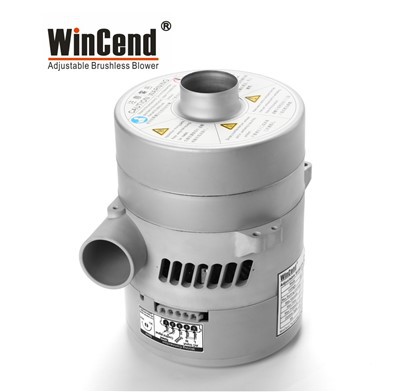
At the end of the day, the diffuser is the quiet workhorse of the high-pressure blower. It doesn’t spin fast or make noise, but without it, the whole system falls apart. That’s the kind of detail we pay attention to when we build our blowers, and that’s the kind of care we put into helping our customers get the right equipment for their jobs.
High-pressure Blower References
- Manohar, S. (2020). Fluid Mechanics for Industrial Blowers and Compressors. Industrial Press Inc.
- Cengel, Y. A., & Cimbala, J. M. (2018). Fluid Mechanics: Fundamentals and Applications (4th ed.). McGraw-Hill Education.
- ASME. (2019). Standard Test Code for fans, blowers, and compressors (Test Code PTC 10). American Society of Mechanical Engineers.
- Miller, D. S. (1990). Internal Flow Systems. BHR Group.
WinCend Technology (Shen Zhen) Co., Ltd.
As one of the most professional high-pressure blower manufacturers in China, we’re featured by quality products and good price. Please rest assured to wholesale advanced high-pressure blower made in China here from our factory. We also accept customized orders.
Address: 4th Lantian Building Kaitian Science Park Pinghu Longgang Shenzhen China
E-mail: sales@wincend.com
WebSite: https://www.wincend-blower.com/
