Hey guys, let’s cut to the chase—if you’re here, you’re probably deep in the weeds of wastewater treatment, aquaculture, or maybe even pond maintenance, and you’re stuck on that one question that keeps popping up: “What’s the actual flow rate of aerobic aeration products?” I’m not here to hit you with jargon so thick you can’t see past it, and I’m definitely not gonna give you a generic number that works for everyone. As someone who’s been selling aerobic aeration gear for over 10 years (I’ve seen it all—from backyard pond guys to municipal water treatment teams), I can tell you this: flow rate isn’t a one-size-fits-all stat. It’s tied to way more than just the product you buy. Let’s break this down like we’re chatting over coffee, no stuffy textbooks required. Aerobic Aeration Products
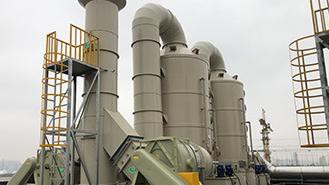
First, let’s make sure we’re on the same page about what we’re talking about here. Aerobic aeration products are basically the workhorses that pump oxygen into water where it’s needed—good for feeding the aerobic bacteria that break down waste, keeping fish alive in aquaculture, or mucking up a pond. The “flow rate” people mean when they ask this is almost always two things: either how much air (or oxygen) the aeration unit moves per minute/hour, or how that air/oxygen gets distributed through the water. I get why it’s confusing—sales reps love to throw around “CFM” (cubic feet per minute, if you’re not a numbers nerd) like it’s a magic number, but that’s only half the story.
Let’s start with the core factors that actually dictate real-world flow rate. First, the type of product you’re using. Not all aerobic aeration stuff is the same. Let’s go through the most common ones I deal with daily:
- Linear Diaphragm Air Pumps: These are the little guys—think the ones you use for a 50-gallon fish tank up to a 5,000-gallon backyard pond. Their flow rates usually range from like 0.1 CFM (super tiny, for desktop tanks) up to 5 CFM for the bigger residential ones. But wait—their actual performance drops if you run them too deep, right? If you stick a pump meant for 2 feet of water down 8 feet, it can barely push half that air. That’s a mistake I see new pond owners make all the time.
- Rotary Vane Blowers: These are the mid-tier workhorses—used for small to medium aquaculture setups or industrial pre-treatment. Their flow rates start around 5 CFM and go up to like 50 CFM, usually. The nice thing about these is they’re way more consistent at deeper depths than diaphragm pumps, but they do use a bit more energy. I had a customer last year who swapped a diaphragm pump for a rotary vane for his 10,000-gallon aquaponics system, and he cut his aeration time in half because the flow rate stayed steady at 10 feet deep, which is where his tanks are.
- Centrifugal Blowers: These are the big boys—municipal wastewater plants, large-scale fish farms, industrial facilities. Their flow rates start at 50 CFM and can go way up to 1,000+ CFM. But again, it depends on the pressure you’re pushing against. If you need to pump air 20 feet deep, that’s different than 50 feet, so the flow rate adjusts. No surprise there, but it’s easy to forget when you’re looking at a spec sheet.
- Aeration Diffusers Themselves: Wait a second—people often forget that the diffuser (the little stone or membrane that pushes air into water) affects flow rate too. A coarse-bubble diffuser will let more air through faster than a fine-bubble one, which is designed to maximize oxygen transfer even if it slows down the air flow. So even if your blower says it puts out 10 CFM, a fine diffuser might only move 8 CFM of actual oxygen into the water, vs. 9.5 with a coarse one. That’s a key point.
Now, the next big thing: what are you using this aeration for? Flow rate isn’t just a number on a spec—it’s about what you need it to do. Let’s give you real examples from my customers, not just textbook numbers.
Take aquaculture, for example. If you’re raising tilapia in a 50,000-gallon pond, the rule of thumb I usually tell people is you need 0.02 to 0.05 CFM per gallon. Wait, that’s a huge range, right? Why? Because tilapia need different oxygen levels than catfish, and water temperature plays a part too. In summer, when water is warm and holds less oxygen, you might need the upper end of that range—0.05 CFM per gallon. If you use a rotary vane blower that pushes 25 CFM for 50,000 gallons, that’s exactly that 0.05 number. But if you were raising koi, which are way more sensitive to low oxygen, you might even need up to 0.07 CFM per gallon, so you’d bump up to a 35 CFM blower.
Wastewater treatment is another big one, and this is where flow rate gets specific. Municipal systems usually need 30 to 60 standard cubic feet per minute (SCFM) per million gallons of wastewater, depending on the organic load. If you’ve got a high-load industrial discharge, that number can jump to 100 SCFM per million gallons. I worked with a small food processing plant last year—they were dumping a lot of vegetable waste into their line, so they needed a 120 CFM centrifugal blower, not the 80 CFM they originally planned for. The difference? Their aerobic bacteria could actually break down the waste instead of it sitting and causing odor, which saved them thousands in fines.
Then there’s the backyard pond crowd, which is where I get the most “wait, is my flow rate enough?” questions. A standard 1,000-gallon decorative pond with fish and plants? You’re looking at 0.01 to 0.02 CFM per gallon, so 10 to 20 CFM total. But if you have a pond with a lot of fish, or it’s shallow and prone to algae, you’ll want that closer to 0.02. I once had a guy call me panicking because his pond was turning green—he was using a tiny 0.5 CFM diaphragm pump for his 2,000-gallon pond. That was way too low; he swapped to a 40 CFM (wait, no, 4 CFM—don’t be that guy) rotary diaphragm, and the algae cleared up in a week. Pro tip for ponds: if you can see bubbles all the way to the surface evenly, your flow rate is probably good. If they’re just popping in one spot, you need more or better diffusers.
Now, let’s talk about the stuff that messes up the “nominal” flow rate numbers you see on websites. First, depth. Every foot of water adds pressure, which means your blower has to work harder to push air down, so flow rate drops. A pump that does 5 CFM at 2 feet deep might only do 3 CFM at 10 feet deep. That’s why it’s so important to check the “free air delivery” (FAD) rating, not just the CFM number. FAD is the actual air flow at the depth you’re using it, not at sea level with no back pressure. I always tell customers to ask for FAD specs, not just advertised CFM—way more accurate.
Altitude too! If you’re operating in Denver (a mile above sea level), air is thinner, so your blower has to work twice as hard to push the same amount of oxygen. That means a pump rated for 5 CFM at sea level might only put out 4 CFM at 5,000 feet, and even less higher up. I had a customer in Colorado who almost bought a pump meant for sea level before we caught that—saved him from wasting money on something that wouldn’t work.
Water temperature and quality matter too. If your water is really dirty, the diffuser can get clogged, which cuts down flow rate. If the water is super cold, it’s denser, so again, more pressure on the blower. Warm water is less dense, so flow rate is a bit higher, but warm water also holds less oxygen, so you might need more of it anyway. It’s a balance, not a math equation you can plug into a calculator and forget about.
Wait, let’s clear up a common myth: more flow rate isn’t always better. I see this all the time. A guy will buy the biggest blower he can find because he thinks more air = more oxygen, but that’s not true. If you’ve got a small pond, pushing too much air just wastes energy, and it can cause too much turbulence, which stirs up muck from the bottom and makes the water dirty. For example, a 1,000-gallon pond doesn’t need a 20 CFM blower—you’re just paying to run a more powerful pump than you need, and you’re wasting electricity. The sweet spot is exactly what you need for your specific setup, not maximum flow rate.
So let’s recap, because I know this is a lot, and you probably just wanted a straight answer. There’s no universal flow rate for aerobic aeration products, but here’s how to figure it out for your use:
- Identify your application: aquaculture, pond, wastewater, industrial?
- Know your water volume and key needs (oxygen levels, waste load, depth).
- Ask for FAD (free air delivery) specs, not just advertised CFM, and account for altitude.
- Match the product type to your scale: small = diaphragm, medium = rotary vane, large = centrifugal.

Now, if you’re still stuck—maybe you’re not sure if your current setup is right, or you’re shopping for a new aerobic aeration product and you want actual numbers tailored to your needs—hit me up. I don’t do pushy sales tactics, I just give honest advice based on what’s worked for hundreds of customers over the years. Whether you’ve got a 50-gallon fish tank, a 100,000-gallon farm, or a municipal system, I can walk you through what flow rate you actually need, not the fancy spec on a website. No jargon, no hidden fees, just real answers. Shoot me a message, and let’s get your aeration working the way it should.
Fenton Reactor References
- Aquaculture Engineering, 2nd Edition, C. Wesley Lee and David J. Brune, Elsevier, 2010.
- Wastewater Treatment Design Manual, U.S. Environmental Protection Agency (EPA), 2009.
- Pond Aeration Best Practices, National Pond Society, 2018.
- Blower and Pump Performance Specifications, Hydraulic Institute, 2021.
Jinan Guangbo Environmental Protection Technology Co., Ltd.
We’re well-known as one of the leading aerobic aeration products manufacturers and suppliers in China. With a professional production team, we are able to meet the needs of the majority of our customers. Please feel free to buy high quality aerobic aeration products from our factory.
Address: No. 102, Commercial and Residential Building, 18th Floor, Tangye Academician Valley, Tangye Sub-district, Licheng District, Jinan City
E-mail: info@gbwwt.com
WebSite: https://www.gbwwt.com/
