When a customer walks into my workshop last month, he tossed a crumpled, cracked plastic reel across the metal workbench and said, “This is why we keep breaking during shipping. I need something that won’t snap when we load 1200 meters of cable on it.” That exchange isn’t unusual for me—after 18 years as a plastic reel supplier, I’ve heard every story of reels failing at the worst possible time: during spooling in a factory, while being stacked in a warehouse, or mid-transit on a truck. The question “What is the bending strength of plastic reels?” isn’t just a technical detail for us; it’s the difference between a customer’s order lasting for 5 years and a replacement order coming back six months later. Bending strength, in simple terms, is the maximum stress a plastic reel can take before it bends permanently, cracks, or breaks entirely. It’s not a one-size-fits-all number—it depends on the plastic material, how the reel is designed, and even the conditions it’s stored and used in. Plastic Reel
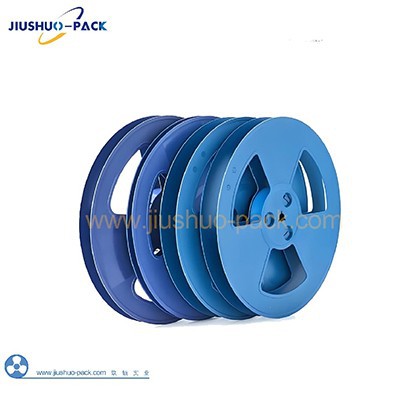
Let’s start with the basics I explain to every new customer. Bending strength, formally called flexural strength, is measured in megapascals (MPa) or pounds per square inch (PSI). For plastic reels, this isn’t just a value from a lab test; it translates directly to real-world use. If a reel has a flexural strength of 50 MPa, that means it can withstand a bending force equivalent to 50 Newtons per square millimeter before failing. A reel that’s too weak will bend when you load it with heavy wire or cable, especially when stacked 10 or 12 high in a warehouse—each reel on top adds pressure to the ones below. Over time, that constant stress weakens the plastic even more, leading to cracks that split the flange or core right where the cable is wound.
The first thing that impacts bending strength is the type of plastic we use for our reels. I’ve seen too many suppliers cut costs by using cheap, low-grade plastics that have flexural strengths as low as 20 MPa. These reels feel flimsy in your hand, and they’re the ones that break within a few uses. At our shop, we stick to materials that balance strength, durability, and cost, because we want our customers’ reels to work for years. Polypropylene (PP) is one of the most common materials we use for standard plastic reels. Its flexural strength ranges from 35 to 45 MPa for general-grade PP, which works well for lighter loads, like small spools of electrical wire or string. For heavier applications—think large reels for telecommunications cable or industrial hose—we use high-density polyethylene (HDPE) or engineering-grade PP. HDPE has a flexural strength of around 30 to 40 MPa, but its impact resistance is much better than standard PP, which makes it ideal for reels that get dropped or moved roughly. Our top-tier reels, for the toughest jobs, are made from reinforced nylon or polycarbonate, which have flexural strengths of 70 to 90 MPa. These can hold loads up to 3000 meters of heavy cable, and they rarely bend or break even under heavy stacking or shipping stress.
Design is just as important as material when it comes to bending strength. I can use the same plastic for two reels, and one will have double the bending strength just because of how it’s shaped. The core (the central part of the reel that holds the cable) and the flanges (the flat ends that keep the cable from slipping off) are the key areas. Reels with thicker cores and reinforced flange edges resist bending much better than thin, flimsy ones. We also add ribs to the inner sides of the flanges—these small ridges don’t just make the reel look stronger; they distribute stress evenly across the plastic, so no single area takes too much force. For example, a standard 12-inch PP reel we make has a ¼-inch thick core and reinforced flanges, giving it a flexural strength of 40 MPa, which is strong enough for most automotive wiring and small electronics cables. If a customer needs a 16-inch reel for longer cable runs, we widen the core to ⅜ inches and add extra ribs, boosting the bending strength to 45 MPa, so it can hold 1500 meters without sagging.
Another factor people often overlook is how the reel is intended to be used. A reel that works great for stationary use in a factory might fail when it’s being transported on a truck, bouncing over potholes, or stacked too high. Last year, a customer who made solar panels ordered 200 reels for their internal cable, using our standard PP reels. They had no issues until they shipped 50 reels to another factory—12 of them had cracked flanges. We looked into it and realized they were stacking the reels 10 high in a shipping container, instead of the recommended 6. The extra weight on the bottom reels put more bending stress on their cores than the material was designed to handle. Since then, we started adding a note to every order: “Maximum stacking height for this reel is 6 units. For higher stacks, upgrade to reinforced HDPE or nylon reels.” It’s a small detail, but it’s saved us from hundreds of repeat calls about broken reels.
We also test every reel we make for bending strength, not just rely on the material’s lab numbers. Our in-house testing station lets us apply controlled force to a reel until it bends or breaks, so we know exactly what it can handle. A common test we do is the “stack test”: we place increasing numbers of reels on top of a test unit and measure how much it sags, as well as how much force it can take before permanent bending. For our nylon reels, we test them to withstand 1500 pounds of force on the core, which is more than enough for even the heaviest industrial loads. This isn’t just for our own quality control—we share the test results with every customer who asks, so they know exactly what they’re investing in.
I’ve seen what happens when a reel’s bending strength is underestimated. A few years ago, a customer who ran a small cable assembly shop bought reels from a supplier that advertised a flexural strength of 30 MPa, but in reality, the reels were made from recycled PP with a strength of only 22 MPa. When they loaded 800 meters of heavy gauge wire on each reel, the cores bent so much that the wire became tangled, and they had to scrap 20,000 meters of product, which cost them thousands in lost revenue. They switched to our reels after that, and now they’ve been repeat customers for over 5 years. That’s why we don’t just sell plastic reels—we sell the peace of mind that their product will reach the customer in one piece, without delays or extra costs.
There are also common myths about plastic reel bending strength I hear all the time. Some people think that bigger reels automatically mean stronger reels, but that’s not true. A 12-inch nylon reel has much higher bending strength than a 20-inch standard PP reel, because the material and design matter more than size. Others think metal reels are always stronger, but for many applications, plastic is better. Plastic reels are lighter, which cuts down on shipping costs, and their bending strength is more than enough for most uses. Plus, they don’t rust, which is a big plus for industries like food processing or agriculture, where metal corrosion can contaminate products. For the jobs that do need extra strength, we offer reinforced options that match or exceed the bending strength of many small metal reels.
If you’re shopping for plastic reels, here’s what to look for to make sure you get the right bending strength. First, match the material to your load: standard PP for light loads, HDPE for medium loads (1000 to 1500 meters), and nylon for heavy loads (1500 meters or more). Then, check the design: look for thick cores, reinforced flanges, and internal ribs to distribute stress. And always ask for test data—any good supplier should be able to show you the flexural strength of their reels, not just tell you it’s “strong enough.”
At the end of the day, a plastic reel’s bending strength isn’t just a technical specification on a spec sheet. It’s the reason your cable or wire doesn’t get damaged during shipping, the reason your production line doesn’t have to pause for broken reels, and the reason your customers keep coming back. For over 18 years, we’ve built our business on making reels that are strong enough to handle whatever our customers throw at them, whether that’s a 3000-meter industrial hose or a small spool of electronics wire. We don’t cut corners on materials or design, because we know that when a reel breaks, it’s not just a broken part—it’s a problem that ripples through your entire operation.
If you’re tired of dealing with flimsy reels that break at the worst possible time, or you’re not sure what bending strength you need for your application, reach out to our team. We’ll work with you to find the right plastic reel, tailored to your load, shipping, and storage needs, so you can focus on your business without worrying about reel failures. Together, we can make sure your products stay intact, from our workshop to your customer’s door.
Paper Carrier Tape References
- ASTM D790, Standard Test Method for Flexural Properties of Unreinforced and Reinforced Plastics and Electrical Insulating Materials
- Engineering Properties of Commercial Thermoplastics, Plastics Industry Association, 2021
- Reel Design Guidelines for Industrial Cable and Wire, Industrial Packaging Association, 2022
Dongguan Jiushuo Industrial Co., Ltd.
As one of the most professional plastic reel manufacturers and suppliers in China, we also support customized service. Please feel free to buy high quality plastic reel made in China here from our factory. Contact us for more details.
Address: 11th Floor, Building 2, Chuangfu Center, Chashan Town, Dongguan City, Guangdong Province, China
E-mail: sales06@zaidaiw.com
WebSite: https://www.carriertape-pack.com/
