If you’ve ever worked in a high-voltage electrical testing lab, you know that unexpected noise can throw off sensitive measurements, damage hearing, or even disrupt the entire testing workflow. As a supplier of CT PT analyzers—devices designed to test current transformers (CTs) and potential transformers (PTs), which are critical for accurate power grid operation—one of the most common questions I get from new clients is: “How loud is this thing when it’s running?” CT PT Analyzer
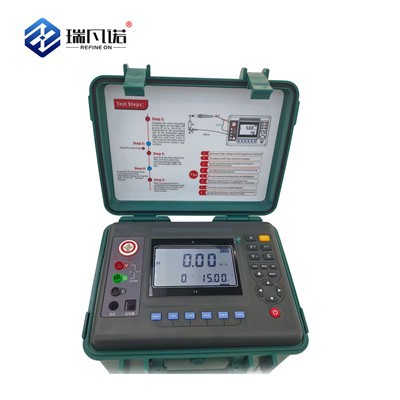
I’ve worked with these machines for over a decade, starting out as a field technician running on-site tests for power utilities, then moving into sales and product development for our team. Over the years, I’ve heard every concern about noise: from lab managers worried about OSHA compliance to contractors who need to work through a full test day without ear protection fatigue. So let’s break down the noise levels of a CT PT analyzer during operation, what causes that noise, and how our products are engineered to keep it manageable—without sacrificing the precision that makes these tools essential.
First, let’s get clear on what we’re measuring when we talk about a CT PT analyzer’s noise level. Noise is quantified in decibels (dB), a logarithmic scale that measures sound intensity. A small increase in dB translates to a big jump in perceived loudness: for example, a 10 dB increase is double the perceived loudness. Normal conversation is around 60 dB, a vacuum cleaner is about 70 dB, and a lawnmower hits roughly 90 dB. The Occupational Safety and Health Administration (OSHA) sets a 8-hour time-weighted average (TWA) limit of 90 dB for workplace noise, and any level above 85 dB requires hearing protection.
So where do CT PT analyzers fall on this scale? It’s not a one-size-fits-all number, though. Noise depends on a few key factors: the type of test being run, the model of analyzer, the ambient environment, and the load of the transformer being tested. Let’s start with the most common tests because that’s where most users spend 90% of their time.
When you run a standard turns ratio test on a CT or PT—one of the first checks anyone does on a transformer—noise levels are relatively low. This test uses low power, usually between 100 VA and 500 VA, depending on the analyzer. For our entry-level analyzers, which are designed for small to medium transformers, this test typically runs at 55 to 65 dB. That’s roughly as loud as a normal conversation in a quiet room, or a small office printer. For our mid-range models, built for medium to large utility transformers, turns ratio test noise clocks in at 60 to 70 dB. Even at the higher end here, that’s quieter than a normal office, so most technicians don’t need ear protection for these tests.
The noise picks up when you move to more demanding tests, though. Excitation current testing is one of the most power-intensive tests for CTs and PTs, because it requires the analyzer to apply a high, precise voltage to the transformer’s primary winding to measure how much current flows through the secondary. For large unit substations or power transformers, these tests can require up to 5 kVA of power. When our mid-range analyzer runs an excitation current test on a 2000 kVA transformer, noise levels jump to 70 to 80 dB. That’s about as loud as a busy city street during the day, or a blender running in your kitchen. Our heavy-duty industrial models, designed for utility-scale transformers up to 10 MVA, will hit 75 to 85 dB during these tests. That’s right around OSHA’s 8-hour TWA limit—so for this test, we recommend hearing protection, like earmuffs rated for 20+ dB reduction, to stay compliant.
Wait, why does the noise jump so much? Let’s demystify what’s causing that sound inside the analyzer. CT PT analyzers have three main components that generate noise: the power supply unit, the cooling system, and the test output connections. The power supply converts standard 120V or 240V AC power from a wall outlet into the precise, adjustable voltage needed for testing. For low-power tests, this is a quiet switching power supply, which hums at a low frequency that’s barely noticeable. For high-power tests, though, the power supply has to draw far more current, which can cause slight mechanical vibration in the transformer core inside the analyzer—this is the low, resonant hum you’ll hear.
Next is the cooling system. CT PT analyzers generate heat when they run high-power tests, so all units have a built-in fan or two to keep components from overheating. The fan speed adjusts automatically based on the test load: for low-power tests, the fan runs at a low speed, moving a small amount of air, so you barely hear it. For high-power tests, the fan ramps up to full speed to dissipate heat, and that’s where most of the noticeable noise comes from. A cheap or poorly designed fan can add a lot of high-pitched whine, but all of our analyzers use industrial-grade, low-noise ball-bearing fans that minimize that whine. We’ve even tuned the fan curves to ramp up gradually, instead of suddenly, so the noise doesn’t spike mid-test and startle users.
The third source of noise is the test output connections. When you connect the analyzer’s leads to the transformer being tested, if the connections are loose or the leads are dragging on a hard surface, they can create a small amount of vibration or contact noise. We always advise technicians to use strain reliefs on the leads and make sure all connections are tight, because loose leads can add 5 to 10 dB of extra noise—enough to push a mid-test excitation current from 78 dB to 85 dB, which is right at the point where extended exposure becomes a concern.
Now, a common question: do ambient conditions affect the analyzer’s noise? Yes, but not in a big way. If you’re testing outdoors on a hot summer day, the analyzer’s cooling system has to work harder to keep components cool, so the fan will run a bit faster, adding 2 to 3 dB of noise. If you’re in a cold lab, the fan will run slower, so noise is 1 to 2 dB lower. The bigger ambient factor is background noise in your workspace: if you’re in a noisy construction site or a utility yard with trucks running, the analyzer’s noise will be less noticeable, but in a quiet lab, even a 55 dB test will stand out.
I want to be clear about what noise levels are considered safe for the people using these analyzers. OSHA’s limits are non-negotiable, and we design all our products to meet or exceed those standards. For any test that runs above 85 dB, we include clear prompts on the analyzer’s screen to remind users to wear hearing protection. We also recommend that technicians limit continuous exposure to levels above 85 dB to no more than 4 hours per day, and levels above 90 dB to less than 2 hours per day, per OSHA’s guidelines. None of our analyzers currently run above 88 dB, even under maximum load, so as long as users follow those guidelines, they’re fully compliant.
Over the years, I’ve seen how poor noise management can cause issues beyond just hearing. A technician once told me that on a job site, the loud hum from a competitor’s analyzer was so loud that he couldn’t hear the test results’ audio alerts—so he missed a faulty winding in a transformer, leading to a costly outage a month later. That’s why we prioritize noise reduction not just for comfort, but for safety. When the analyzer is quieter, you can focus on the test results, instead of covering your ears or cranking up a radio to drown out the sound.
Another point: portable vs. bench-top analyzers. Most of our entry-level models are portable, designed to be taken to job sites, and those are typically smaller, with smaller power supplies and smaller fans, so their noise levels are lower—usually 50 to 70 dB across all tests. The heavier bench-top models, for use in fixed labs, have larger power supplies for high-power tests, so they’re a bit louder, up to 85 dB. But we’ve engineered our portable line specifically for field use, where noise can be a bigger issue in tight, enclosed spaces like utility vaults. We added a sound-dampening casing to our portable models that cuts fan noise by 10% compared to older designs, which is a huge difference in a small, enclosed space.
Let me also address a misconception: some users think that quieter analyzers are less powerful. That’s not true at all. The noise level is about design, not power. A portable model can have the same maximum power output as a bench-top model, just with a better-designed cooling system and sound-dampening to keep noise lower. We test every analyzer before it leaves the factory, measuring noise at full load in an anechoic chamber to make sure it meets our noise specifications, so you don’t have to choose between power and quiet operation.
If you’re in the market for a CT PT analyzer, the right noise level for you depends on how and where you’ll use it. If you’re doing mostly turns ratio or polarity tests in a quiet lab, a portable model will be more than quiet enough. If you’re running high-power excitation or burden tests on large transformers, you’ll want a mid-range or heavy-duty model, and we strongly recommend using hearing protection during those tests.
At the end of the day, the goal of a CT PT analyzer is to deliver accurate, reliable results—without creating unnecessary hassle for the people who use it. We’ve spent years refining our products to balance power, precision, and noise reduction, because we know that a tool is only as good as its ability to fit into your workflow, not just the numbers it outputs.
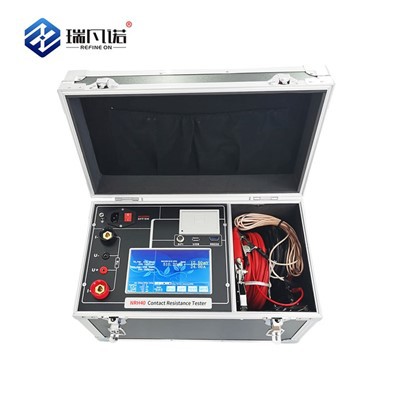
If you have more questions about noise levels for specific tests, models, or job sites, or you’re ready to find the right CT PT analyzer for your team’s needs, we’d love to discuss your requirements in detail. We can walk you through noise specifications for any model, share case studies of how our analyzers have performed in your industry, and help you choose a solution that fits both your technical needs and your workplace safety guidelines.
Transformer Oil Tester References
- Occupational Safety and Health Administration (OSHA). Noise Standards: 29 CFR Part 1910.95
- IEEE Standard C57.13, Standard Requirements for Instrument Transformers
- International Electrotechnical Commission (IEC) 61869, Instrument Transformers
- National Electrical Manufacturers Association (NEMA) Standard BP 6, Measurement of Sound Levels for Electrical Equipment
Refine On (Hebei) Electric Power Technology Co., Ltd.
Refine On (Hebei) Electric Power Technology Co., Ltd. is one of the most reliable ct pt analyzer manufacturers and suppliers in China, also supports customized service. Please feel free to wholesale advanced ct pt analyzer at competitive price from our factory. Contact us for quotation.
Address: Building 13, Liandong U Valley, No.64, Jing SAN South Street, Economic Development Zone, Mancheng District, Baoding City, China
E-mail: victor@transformer-test.com
WebSite: https://www.transformer-test.com/
