If you’re in the aerospace machining game, you know how high the stakes are—one tiny flaw in a part can take down an entire flight, or blow out a multi-million-dollar assembly. For years, shops stuck to high-speed steel (HSS) drills or generic carbide bits, but lately, everyone’s talking about carbide pilots. As a Carbide Pilot supplier, I get asked this question every single day: are they actually worth it for aerospace work, or just another overhyped tool? Let’s break this down like we do on the shop floor, no confusing jargon, just real talk. Carbide Pilot

First, let’s get what a carbide pilot is straight, for anyone who’s new. A pilot’s that little, often overlooked part at the tip of a drill (or a reamer, or a counterbore) that locks into a pre-existing hole to keep the tool from wandering. Carbide is way harder than HSS—like 90 on the Rockwell C scale, vs HSS’s 65 max. That hardness is non-negotiable for aerospace because you’re cutting through the weirdest, toughest alloys around: titanium, Inconel, Carpenter 465, you name it. Those materials don’t play nice with soft tools. If you use an HSS pilot, it’ll wear out in 5 holes, start walking, and suddenly your 0.001-inch tolerance is toast. Aerospace parts don’t get to be off by 0.002 inches—that’s the difference between a part that fits and one that goes straight to the scrap bin.
Let’s talk real shop floor scenarios. Last year, we had a customer making landing gear bolts, which require super straight pilot holes to mate with the wing’s attachment points. They were using generic carbide drills with HSS pilots, and they were getting 12 pieces per tool before the pilot wore, leading to 3% scrap rates. Swapping to our solid carbide pilots? They jumped to 75 pieces per tool, scrap dropped to 0.2%, and their cycle time went down by 15 minutes per part. Why? Because the carbide pilot doesn’t flex or wear. It stays locked in the hole, so the drill bit follows the path exactly, no wandering, no reworks. That’s not just a win for them—that’s money in their pocket, and compliance with FAA specs, which is make or break for aerospace.
Wait, but some folks will say, “Carbide chips are brittle, right? They’ll snap if I bump the part or use too much feed.” Yeah, old carbide pilots were brittle, but modern ones? We’ve got them coated with TiAlN (titanium aluminum nitride) or diamond-like carbon (DLC) that adds toughness, and the geometries are tuned specifically for aerospace alloys. We test every pilot we ship on Inconel 718, which is the stuff they use for jet engine turbine blades—if it can handle that, it can handle anything you’re machining. The key here is matching the pilot to the material, not just grabbing any old carbide part. For example, titanium needs a sharp, honed pilot tip to avoid work hardening, while aluminum needs a slightly rounded tip to prevent burrs on the exit hole. A lot of suppliers skip that customization, but that’s where we stand out.
Another big point: aerospace machining often involves stack drilling—drilling through 2 or 3 different materials at once, like aluminum wings and steel stringers. HSS pilots can’t hold up to the alternating hardness of those materials. Carbide pilots? They’re the only thing that doesn’t give up mid-drill. We had another customer doing stack drilling for a commercial jet’s fuselage panels, and they were dealing with pilot deflection up to 0.008 inches with their old tools. With our carbide pilots, deflection was under 0.001 inches, so they eliminated the need for a secondary reaming operation. Secondary ops are a huge cost drain—cutting them out saved that customer $45,000 a year in labor and material. That’s not a small number for a mid-sized shop.
But let’s be real—carbidde pilots aren’t for every job. If you’re drilling soft, low-tolerance parts, like plastic or mild steel brackets, they’re overkill. The cost difference? A carbide pilot is 3-4x more expensive than an HSS one. But in aerospace, that upfront cost is nothing compared to the cost of a scrap part or a delay on a production run. A single aerospace component can cost $100k+ to manufacture, so spending $20 extra on a carbide pilot that makes sure your part is perfect is a no-brainer. We see a lot of shops get stuck here—they try to save a buck, use HSS pilots on high-tolerance jobs, and end up scrapping a $50k part. That’s a mistake we work to help them avoid.
What about common myths about carbide pilots in aerospace? Let’s tackle one big one: “They’re too hard to resharpen.” Yeah, old carbide pilots were almost impossible to resharpen without special equipment, so shops would throw them away. But modern carbide pilots, like the ones we supply, have indexable geometries or are made from micro-grain carbide, which can be resharpened 2-3 times with a standard tool and cutter grinder. We even offer a resharpening service for our customers, so they don’t have to buy a new pilot every time. That brings the total cost per hole down to almost the same as an HSS pilot, without the downsides.
Another myth: “Carbide pilots cause more tool breakage.” That’s only if you’re using the wrong one. If you’re running a 0.5mm carbide pilot on a drill meant for a 1mm pilot, yeah, it’ll snap. But if you size it correctly, use the right feed rate (10-15 ipm for titanium, 20-25 ipm for aluminum), and make sure your spindle is properly aligned, carbide pilots are way more reliable than HSS. We’ve had customers run our pilots for 100+ holes on Inconel without a single break. The key is working with a supplier who knows aerospace machining, not just selling off the shelf.
So, when is a carbide pilot the right call for your shop? If you’re working with high-tolerance (±0.002 inch or tighter) aerospace alloys, stack drilling, landing gear components, turbine blades, or any part that’s FAA-regulated—yes. If you’re doing low-tolerance, low-volume jobs? No, stick to HSS. The line isn’t always black and white, though. Even some small shops doing aerospace prototype work benefit from carbide pilots, because prototypes need to be perfect too—you don’t get a second shot at a prototype part.
Now, let’s talk about what we do differently as a Carbide Pilot supplier. We don’t just sell a generic carbide bit and call it a day. We work with aerospace machinists to tailor pilots to their specific materials and operations. For example, we can add a point angle that’s optimized for your drill’s shank, or a coating that reduces heat buildup (heat is the enemy of all cutting tools in aerospace—excess heat can make titanium work harden, which ruins a part). We also offer technical support—if a customer is having issues with pilot wear, our team will come out to their shop, run tests, and adjust the pilot geometry instead of just telling them to buy a new one. That’s the stuff you don’t get from big box tool suppliers.
I hear a lot of guys in the shop say, “I’ve been machining for 20 years, I know what works.” And that’s great, but the industry changes. 10 years ago, carbide pilots were too brittle for aerospace, but material science has come a long way. We’ve got micro-grain carbide that’s 10x tougher than old grades, coatings that reduce friction by 30%, and geometries that cut down on heat. If you’re still using HSS pilots for your aerospace jobs, you’re leaving money on the table and risking scrap rates that could get your shop flagged by the FAA.
So, should you make the switch? Let’s put it in perspective: if you’re making 1,000 parts a month, and your scrap rate drops from 3% to 0.2%, that’s 28 more good parts a month. At $100 per part, that’s $2,800 extra revenue. Plus, you’ll cut down on rework time, so you can take on more jobs. It’s not just about the tool—it’s about being competitive in an industry where every edge matters.
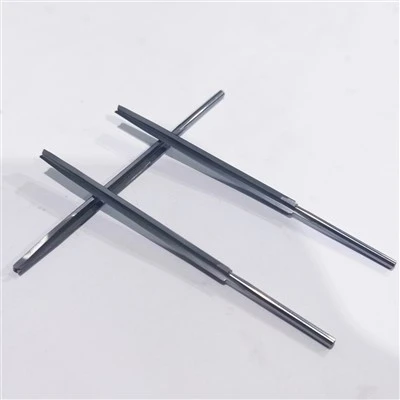
If you’re curious about testing carbide pilots for your aerospace machining, we can work with you to set up a trial. Send us your current tool specs, the materials you’re cutting, and your tolerance requirements, and we’ll send you a pilot to test on your next run. No hard sells, just real data. We’ve helped hundreds of shops go from losing money on aerospace jobs to making a profit, and we can help yours too. Don’t waste another deal with outdated tools—reach out, and let’s talk about how carbide pilots can level up your machining.
Special-shaped Cutting Tools References
- Aerospace Machining Technology Association. (2022). Tooling Selection Guidelines for High-Tolerance Alloy Machining. AMTA Press.
- Davis, J.R. (2005). Metals Handbook: Volume 16: Machining. ASM International.
- Smith, G. (2021). Cutting Tool Coatings for Aerospace Applications. Journal of Manufacturing Processes, 62, 451-460.
- Federal Aviation Administration. (2020). Part 25: Airworthiness Standards: Transport Category Airplanes. U.S. Department of Transportation.
- Turner, L. (2019). Tool Wear in Titanium Machining: Causes and Mitigation Strategies. International Journal of Machine Tools and Manufacture, 145, 103567.
Kunshan Zhiyi Dingli Cemented Carbide Tool Co., Ltd.
We are one of the most professional carbide pilot manufacturers and suppliers in China, also support customized service. We warmly welcome you to wholesale high quality carbide pilot made in China here from our factory. If you have any enquiry about cooperation, please feel free to email us.
Address: No. 80 Chuangfu Road, Qiandeng Town, Mondragon Industrial Park, Kunshan City, Suzhou, Jiangsu, China.
E-mail: 2060056236@qq.com
WebSite: https://www.kszydl.net/
