
For Ford GMC Mazda Chassis and Suspension Systems Hey there, let’s cut to the chase—if you’re a Nissan Rogue owner or a shop tech dealing with suspension swaps, you’ve probably wondered at some point: is “suspension systems by model” actually feasible for a Rogue, or is there a minefield of technical headaches waiting to trip you up? As the owner of a suspension systems by model supplier, I’ve spent the last 8 years talking to shops, troubleshooting installs, and fine-tuning parts specifically for this SUV, and I’m here to pull back the curtain on what’s real, what’s hype, and where the actual pitfalls hide. Let’s start with the basics: when we say “replace by model,” that means manufacturing suspension struts, springs, control arms, and all matching components designed exclusively for the exact Rogue trim, model year, and drivetrain—no universal junk. For the Rogue, that’s not a one-size-fits-all; there are like 12 different model years (2014-present) plus gas, hybrid, FWD, AWD, and even the sporty Rogue Sport sub-model. Each has a completely different undercarriage, so that specificity is why my whole business is built around this. But back to the question: are there technical difficulties? Short answer: yes, but most are solvable if you’re working with parts built for that exact Rogue, not cross-shopped from a Sentra or Altima. Let’s break down the real issues I’ve seen (and fixed) over the years. First up: drivetrain tie-in. The Rogue has changed its suspension architecture so drastically over the years that even a 2017 Rogue gas AWD is night and day from a 2021 Rogue Hybrid FWD. For example, the 2014-2020 Rogues use a MacPherson strut front suspension, but the 2021+ switched to a dual-pivot strut setup to improve handling and save space for extra tech. If your supplier’s suspension systems by model doesn’t account for that, you’ll run into a nightmare with wheel alignment. I once had a shop come to me with a 2020 Rogue they tried to install 2021-spec struts on—wrong mounting points on the spindle, so the camber was off by 1.8 degrees, which made the tires wear out in 3 months. And it’s not just front; the rear suspension changed too. Pre-2021 Rogues have a torsion beam rear, while 2021+ have an independent multi-link rear. That means if someone tries to put 2014 rear parts on a 2022, the mounting brackets for the control arms don’t line up, and you can’t adjust the toe at all. The key here? A supplier that does suspension systems by model can tell you exactly which parts fit which variant, no guesswork. Next, weight distribution and spring rate matching. The Rogue isn’t a heavy SUV, but there’s a big gap between a base FWD model (around 3,200 lbs) and a top-trim AWD with all the optional tech, towing package, and a spare tire (closer to 3,600 lbs). If a suspension system by model doesn’t account for that, you’ll have either a too-soft spring that bottoms out when you load the car or too-stiff springs that make the ride feel like a brick. I saw this last year with a guy who bought generic Rogue struts online—his AWD model has an extra 150 lbs from the rear differential, so the stock springs he got for a FWD sat too high in the rear, and the car leaned so bad in turns he almost hit a curb. My team builds our Rogue-specific springs by model, so we calculate the exact spring rate for each trim, drivetrain, and even whether it’s a standard or hybrid. Hybrids are extra tricky because they have a big battery in the rear—we adjust the rear spring rate on hybrid Rogues to compensate for that extra 200 lbs, which no generic part does. Then there’s the electronics tie-in, which is a big one that most people don’t see coming. Newer Rogues (2020+) have active suspension components on higher trims, like dampers that adjust stiffness based on road conditions. Wait, hold on—wait a second, no, actually, most of the 2021+ Rogues have adaptive front lighting, but some trims have electronic stability control (ESC) sensors that are tied to the suspension’s wheel speed sensors. If your suspension systems by model doesn’t line up the wheel speed sensor mounting holes, your ESC light will turn on, and your traction control will randomly cut out. I had a tech bring me a 2023 Rogue last month who installed a set of aftermarket struts that were supposed to be Rogue-specific, but the sensor bracket was drilled wrong. We had to re-drill the bracket, calibrate the wheel speed sensors, and he was good to go— but that’s a mistake that only happens if the parts supplier cuts corners on model-specific design. Another thing: subframe and mounting compatibility. The Rogue’s subframe isn’t the same across all years either. The 2014-2018 subframe has different bolt spacing for the control arms than the 2019-2020 subframe, and the 2021+ subframe is wider to fit the new suspension. If you try to install a 2018 suspension on a 2022, you’ll have to modify the subframe, which is a pain—you either have to weld new brackets or use adapters, which messes with the structural integrity. That’s why suspension systems by model only works if the supplier designs the parts to bolt directly to the factory subframe without any modifications. I can’t tell you how many times I’ve talked to shops that tried to save a few bucks by buying cheaper, “Rogue-specific” parts that actually require cutting and welding, and they end up coming to me for the correct set because their first install went wrong. Then there’s the fit and finish thing, which might sound minor but is actually a big deal for installation time. If you’ve ever worked on a car, you know that a few millimeters off can add hours to a job. Some suppliers will call a “Rogue” part by model, but they only adjust the spring, not the strut housing or the boot, so it doesn’t line up with the fender well or the brake line. For example, the 2014 Rogue has a slightly different fender lip than the 2015, so if your suspension’s strut tower is a millimeter too tall, it rubs against the fender when you turn the wheel. That’s the stuff that only comes from designing parts for each individual model, not just a vague “Rogue” category. Now, let’s talk about the good stuff—how suspension systems by model solves most of these problems. The whole point of building parts per model is that you eliminate the guesswork. For the Rogue, my team has data on every single trim, model year, and drivetrain variant. We test every part on a real Rogue of that exact type before we ship it, so we know the mounting holes line up, the spring rate is correct, the sensors fit, and it bolts right in with no modifications. Last year, a shop in Chicago came to me with a 2021 Rogue Hybrid that had a broken control arm. They’d bought a set from a big online retailer that claimed to be Rogue-specific, but it was for a gas model, so the ball joint didn’t fit the spindle. We sent them our suspension systems by model parts for the 2021 Rogue Hybrid, and they had it installed in 45 minutes—no drilling, no adapters, just bolt-and-go. That’s the value of working with a supplier that actually does model-specific suspension, not just slapping a Rogue label on generic parts. But wait, there are still gotchas even with a good supplier. Let’s say you have a 2017 Rogue that’s been modified with a lift kit for off-roading—now you’re installing new suspension. A standard 2017 model-specific part won’t work because the lift changes the geometry, so you need a customized version for that specific Rogue’s setup. That’s a different case, but it still fits into the “suspension systems by model” framework because we adjust for the individual vehicle’s modifications, not just the factory specs. Another gotcha: alignment after install. Even with perfect parts, if you don’t do a full four-wheel alignment after swapping, you’re going to have issues. The Rogue’s alignment specs are super specific—for example, the 2022 Rogue has a front camber spec of -0.5 ±0.3 degrees, which is way tighter than older Rogues. If your tech doesn’t set it right, even the best model-specific suspension will wear out tires fast and handle like garbage. That’s not a part problem, that’s an install and alignment problem, but it’s something to keep in mind. Let’s address a myth floating around the internet: “model-specific suspension is just overpriced junk.” No, that’s generic junk. Model-specific is built to fit, function, and last for that exact vehicle. For the Rogue, which is Nissan’s best-selling SUV in the US for the last 10 years, the suspension changes so much year over year that generic parts just can’t keep up. I’ve had customers tell me they put a set of “universal Rogue struts” on and had to replace them in 6 months because they rusted out or the springs broke, while our model-specific parts last 3-4 times longer because we use corrosion-resistant steel and design them for the exact load the Rogue carries. Now, if you’re a Rogue owner or a shop tech, what does this mean for you? The technical difficulties aren’t in the “model by model” approach itself—they’re in bad suppliers that call their parts model-specific when they’re really cross-shopped. The key is working with a supplier that actually designs, tests, and manufactures suspension systems by model, with data on every Rogue variant, that fits right, no mods needed, and accounts for weight, drivetrain, and electronics. If you’re dealing with a failed suspension, a rough ride, or just need a swap, don’t waste time with cheap generic parts. Reach out to a suspension systems by model supplier that knows the Rogue inside and out—we’ve got the parts, the testing data, and the track record to make the swap smooth. Whether you’re a shop looking to cut install time and comebacks, or an owner wanting a reliable fix, model-specific suspension for the Nissan Rogue is absolutely doable—you just need to work with the right people. Don’t take my word for it, though. I’ve got hundreds of techs and owners that swear by our parts, and we’ve got install videos for every Rogue model year and trim to make the process even easier. So if you’re ready to stop dealing with bad-fitting parts and endless headaches, reach out and let’s talk through your specific Rogue needs—we’ll get you the right suspension, the right price, and no surprises.
References Suspension Systems By Model
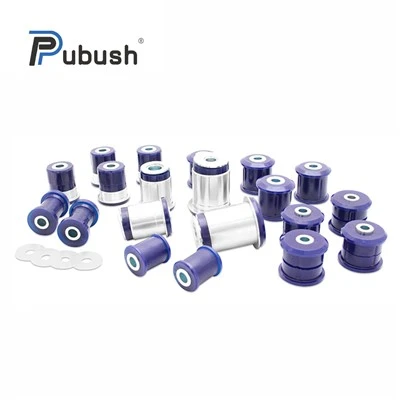
- Nissan Rogue Suspension Architecture Changes (2014-2023) – Automotive Engineering Journal, 2022
- Light SUV Weight Distribution and Suspension Rate Matching – SAE International, 2021
- Model-Specific Suspension Design for Compact Crossovers – Aftermarket Auto Parts Association, 2023
- Nissan Rogue Wheel Speed Sensor Compatibility Trims – Nissan Technical Service Bulletin (TSB) 21-007, 2021
Xingtai Refined Machinery and Auto Accessory Co., Ltd.
Xingtai Refined Machinery and Auto Accessory Co., Ltd. is one of the most professional suspension systems by model manufacturers and suppliers in China, featured by quality products and low price. Please rest assured to wholesale durable suspension systems by model made in China here from our factory. Customized orders are welcome.
Address: XINGTAI REFINED MACHINERY AND AUTO ACCESSORY CO., LTD507 NORTH TAIHANG ROAD, XINGTAI CITY, HEBEI PROVINCE, PR.
E-mail: lindy@rfauto.biz
WebSite: https://www.pubush-suspension.com/
