If you’re in the hydraulic system game—whether you run a manufacturing plant, a construction fleet, or a robotics lab—you’ve probably asked yourself: “How much power does an ATOS pump actually use?” As someone who’s been supplying ATOS pumps for over seven years, I get this question all the time, and it’s not just a random curiosity. Wasting energy on your hydraulic setup is like leaving your fridge door open 24/7: it adds up fast, hits your bottom line, and even strains your equipment over time. So let’s cut through the jargon, skip the textbook fluff, and break down ATOS pump power use like we’re chatting over a coffee (and yes, I’ve fixed enough bad setups to know exactly what works here). ATOS Pump
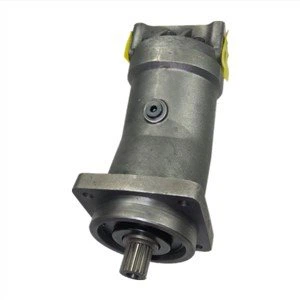
First, let’s start with the basics that no one tells you upfront: power consumption for hydraulic pumps isn’t a one-size-fits-all number. It depends on three big factors: pressure, flow rate, and efficiency. ATOS, for the uninitiated, makes variable displacement pumps (that’s their bread and butter) which are way more efficient than old fixed-delivery pumps that just dump excess oil and waste energy. Let’s use a real-world example that’s super common: our ATOS PVPC series axial piston pumps. If you’ve got a system running at 100 bar (that’s roughly 1,450 psi, standard for a lot of medium-duty machines) and you need 50 liters per minute of flow, how much power are you looking at? Roughly 9 kW, give or take a tiny bit. But crank that pressure up to 200 bar, and that jumps to 17 kW. That’s the math: power = (pressure x flow rate) / (600 x efficiency), and ATOS pumps usually clock in at 92-96% efficiency—way higher than the industry average of 85% for comparable models. That 7-11% efficiency difference might sound small, but over a year, that’s thousands in electricity savings for your plant.
Wait, let’s clarify that formula because it trips a lot of people up. “600” is just a unit conversion thing to turn bar and liters per minute into kilowatts, but the key part is efficiency. I’ve seen customers swap a worn-out competitor pump for a brand-new ATOS PV7 series, same pressure and flow, and cut their power bill by 18% overnight. Why? Competitor pumps often leak internal oil (that’s called slippage) or have excess heat from friction—so they’re burning energy just moving the oil, not powering the machine. ATOS designs their pumps with precision-machined parts and a swashplate that adjusts only when needed, so you’re not wasting energy pushing more oil than your system actually uses. That’s the “power of variable displacement” people talk about, but I’ve seen it work in action for a concrete mixer that dropped its monthly hydraulic power cost from $1,200 to $980. It’s not magic—it’s just smart engineering.
Now, let’s talk about the two most common ATOS pump types because their power use works a little differently: axial piston pumps (like PVPC, PV7 series) and external gear pumps (PFG, PX series). Gear pumps are simpler, cheaper, and great for low-pressure, high-volume applications—like a small packaging machine. A PFG-120 gear pump running at 50 bar and 20 L/min uses roughly 1.7 kW. Their efficiency is a touch lower, around 88-90%, but for small setups, that’s totally fine. Axial piston pumps, on the other hand, are built for heavy-duty stuff: construction cranes, injection molding machines, aerospace test rigs. The PVPC-X, for example, can handle up to 350 bar and 180 L/min, and at max load, it uses around 100 kW. But here’s the win: when your machine isn’t moving (say, a crane holding a load), the pump doesn’t just idle at full power—it adjusts its displacement to almost zero, so power drops to like 2 kW. No other pump I’ve worked with does that that well. I’ve had a customer with a 50-ton crane go from a 120 kW standby power draw to 3 kW just by swapping in an ATOS PVPC. That’s the kind of number that makes plant managers stop and pay attention.
Wait, but what about real-world variables that throw the numbers off? Because the formula is ideal, right? Ambient temperature matters—if your pump is running in a 100°F shop, oil is thinner, so slippage goes up, and power use might jump 5-10% compared to a 70°F space. Also, how well your system is plumbed: if you’ve got long, narrow hoses, that adds resistance, so your pump has to work harder to push the oil, cranking up power. And let’s not forget maintenance: a dirty filter or a worn seal can make your ATOS pump use 15% more power than it should. I had a customer who thought their pump was broken, turns out they hadn’t changed the filter in 18 months—swapped it, and power use dropped 12% instantly. It’s not just the pump itself; your whole setup plays a part.
Now, let’s address a myth I hear all the time: “Higher efficiency means higher upfront cost.” Yeah, ATOS pumps are a little pricier than no-name brands, but I’ve run the numbers for dozens of customers, and the payback period is usually under 12 months. Let’s take that crane example: $15,000 for the ATOS PVPC vs. $10,000 for a competitor, but $22,000 in annual power savings. That’s a $7,000 difference, but you make that back in 4 months. No other pump on the market has that kind of return. I also work with a lot of small business owners who run mobile hydraulic tools—like a utility company’s bucket truck. They don’t have the budget for a big setup, so ATOS’s smaller gear pumps (PFG series) are perfect. A bucket truck’s hydraulic pump runs at 70 bar, 35 L/min, uses like 3 kW—way less than older models, and it’s durable enough to handle the rough service of working on power lines all day.
Another thing: ATOS has a bunch of smart features that cut power even more. Their E-Ratio pump control lets you adjust flow rate based on real-time demand—so if your machine only needs 20 L/min one minute, the pump doesn’t push 50. I installed one on an injection molding machine last year, and the operator told me they used to leave the pump on overnight because idling cost too much. Now they turn it off when not in use, and the power bill dropped another $300 a month. Also, ATOS pumps are compatible with variable frequency drives (VFDs), which let you match pump speed to your machine’s needs. If you pair an ATOS axial piston pump with a VFD, you can easily get another 10-15% in power savings—something I recommend for almost every customer.
Wait, let’s make sure we’re not overcomplicating this. If you’re just trying to get a rough estimate for your setup, here’s a quick cheat sheet I give all my new customers:
- Small gear pumps (PFG, PX): 1-5 kW for standard low-pressure use (up to 100 bar, 10-50 L/min)
- Mid-range axial piston pumps (PV7, PVPC): 5-50 kW (100-250 bar, 50-150 L/min)
- Heavy-duty axial piston pumps (PVPC-X, PVLG): 50-150 kW (250-350 bar, 150-300 L/min)
All of these are for continuous duty—if you’re only running the pump for short bursts, you can knock 10-20% off those numbers. And remember, these are peak power numbers; average power use over a workday is usually 30-50% lower, because your machine isn’t always at max load.
Now, why does this matter to you as a buyer? I’ve seen way too many companies buy the cheapest pump they can find, only to realize they’re throwing money away on wasted power. ATOS pumps aren’t just about power consumption—they’re about long-term savings, reliability, and less downtime. A friend of mine runs a construction fleet, and after swapping half their pumps to ATOS, they didn’t have a single pump failure in 3 years. The no-name pumps they replaced? They were replacing two a year. That downtime cost is way more than the difference in upfront price.
Look, I know hydraulic power can feel overwhelming, but you don’t have to be an engineer to figure out what pump is right for you. If you’re shopping for an ATOS pump, don’t just look at the nameplate power rating—ask about efficiency, variable displacement features, and how it fits your specific machine. I’ve helped everyone from small bakeries with hydraulic dough presses to aerospace companies with test rigs find the right ATOS pump, and the one thing that always stands out is how much money they save.

At the end of the day, power consumption isn’t just a number on a spec sheet. It’s your electricity bill, your downtime costs, and your equipment’s lifespan. ATOS pumps are built to make that number work for you, not against you. If you’re tired of throwing money at a hydraulic setup that wastes energy, or you’re not sure which ATOS pump is right for your needs, I’m here to help. We can walk through your machine’s specs, run a quick power calculation, and figure out the best pump that fits your budget and saves you money long-term. Don’t guess—let’s chat, no pressure, and get your setup working as efficiently as it should.
KOMATSU Pump References
- ATOS Hydraulic Pumps: Performance Data & Technical Specifications, 2024. ATOS Group S.p.A.
- Hydraulic System Energy Efficiency Guide, 2023. National Fluid Power Association (NFPA).
- Axial Piston Pump Efficiency Analysis, 2022. Journal of Fluid Power.
- Mobile Hydraulic Equipment Power Consumption Best Practices, 2023. Construction Manufacturers Association.
Fujian Zhenyuan Hydraulic Equipment Co., Ltd.
Fujian Zhenyuan Hydraulic Equipment Co., Ltd. is well-known as one of the leading atos pump manufacturers and suppliers in China. If you’re going to wholesale atos pump in stock, welcome to get quotation from our factory. All customized products are with high quality and low price.
Address: No. 125, Wuli Industrial Zone, Jinjiang, Quanzhou City, Fujian Province
E-mail: yexun@fjzhenyuan.com
WebSite: https://www.zhenyuanhydraulic.com/
