If you’ve ever worked in automotive, aerospace, consumer electronics, or industrial equipment, you’ve probably run into magnesium die casting before. It’s a game-changer for parts that need to be lightweight, strong, and durable—but one question I get all the time from new clients and people just dipping their toes into the industry is, “What’s the maximum size of a magnesium die-cast part?” As a magnesium die casting supplier with years of hands-on experience, I don’t just give a one-number answer. It depends on a ton of variables, and I’ve seen projects that surprised even veteran engineers when it comes to what we can pull off. Magnesium Die Casting

Let’s start with the basics to set the stage. Die casting, for anyone new, is the process of forcing molten metal under high pressure into a steel mold (called a die) to make precise, complex parts. Magnesium is the lightest structural metal out there—about 35% lighter than aluminum, 75% lighter than steel—and that’s why it’s so sought after. But its physical properties, plus the machinery and processes we use, shape how big a part we can make.
First, let’s talk about the hard limits. Right now, the largest magnesium die cast parts we’ve produced for commercial use clock in around 1,500 millimeters (about 59 inches) in length, weighing up to 25 kilograms (55 pounds). Wait, that’s bigger than I thought a few years back, too. A decade ago, max size was more like 1,000mm, but advances in die casting machines, mold design, and magnesium alloy formulas flipped that script. But that’s the top end for standard production runs. Most day-to-day parts we make are way smaller—think of EV motor housings, laptop frames, or power tool housings, which usually range from 100mm to 800mm. So why the gap? It’s all about what you need the part to do.
Let’s break down the factors that actually determine size, not just some random number. The first big one is the die casting machine itself. Machines are rated by their clamping force—measured in tons. For small consumer electronics parts, you might use a 500-ton machine. For mid-sized parts, like a motorcycle engine casing, you’re looking at 1,000 to 1,500 tons. The biggest magnesium parts we do? We use 2,500-ton machines. Here’s why clamping force matters: when you inject molten magnesium into the die, it exerts a lot of pressure. If the machine can’t clamp the die shut, it’ll flash—molten metal seeps out around the edges, ruining the part and wasting material. Larger parts have bigger die cavities, which means more surface area, so more pressure to contain. So you can’t make a 1,500mm part on a 1,000-ton machine; you need the beefier machine to hold the die closed.
Next, alloy choice. Not all magnesium is the same. We work with a few common alloys: AZ91D is the workhorse, great for general parts; AM60B is more ductile, good for impact-heavy stuff like car brackets; and AE44 is high-temperature resistant, perfect for EV components that get hot. Each alloy behaves differently when molten. Some are more fluid, which is key for filling large, thin die cavities without defects. If you try to make a really big part with an alloy that’s too thick when molten, you’ll get cold shuts—places where the metal solidifies before it fills the cavity, leaving gaps. AE44, for example, has a lower melting point than some other high-performance alloys, which lets it flow better over long distances, making it possible to cast larger parts without defects. That’s a big reason why the max size has gone up in recent years; alloy tech is better.
Then there’s part complexity. A simple, flat magnesium plate can be way bigger than a complex, multi-feature part. Wait, that sounds counterintuitive, but hear me out. A flat plate only needs a simple die, no complex cores for holes or undercuts. A complex part, like an EV battery tray, has dozens of mounting points, cooling channels, and reinforcement ribs. Each of those needs cores in the die, which adds more structure that the molten metal has to flow around. For a complex 1,200mm part, you might need to split the die into multiple pieces (called a multi-slide die) to pull off undercuts, but that adds limitations. We once tried to make a complex automotive front-end frame around 1,400mm and hit a snag: the core pins for the mounting holes were too far apart, so the metal couldn’t fill the gaps without causing porosity (tiny air bubbles that weaken the part). We ended up adjusting the design to simplify the cores, trimming it down to 1,250mm, which worked perfectly. Complexity often forces engineers to shrink the size a bit, even if the machine and alloy could handle a bigger part.
Tooling (the die itself) is another huge factor. Making a large die isn’t just a bigger version of a small die. Large dies are massive—they can weigh 10+ tons themselves, so you need specialized equipment to machine, transport, and clamp them. The steel used for dies has to be durable enough to handle thousands of shots of molten magnesium; magnesium is actually pretty corrosive, so dies need to be made from high-grade tool steel and treated with coatings to resist corrosion and wear. The bigger the die, the more opportunities for defects like warping during cooling, or uneven pressure across the cavity. We once had a client who wanted a 1,800mm part—we ran the numbers, and the die alone would have cost 30% more than the part itself, plus the machine needed to hold it would have been custom, which is way too expensive for their production volume. So sometimes size is limited by cost, not capability.
Wait, what about ultra-large parts that aren’t die cast? Sometimes people ask, why not just assemble smaller die-cast parts into a bigger one? That’s a valid question. For example, some aerospace structures use multiple magnesium parts bolted or welded together. But that adds steps: secondary operations, fasteners, potential points of failure. The nice thing about a single large die-cast part is structural integrity—no weak points from joints. But it’s a tradeoff. For a part that needs to be over 2,000mm, we usually recommend assembly because the die, machine, and process would be too costly and high-risk for most clients. We did work on a wind turbine component a few years back that was 2,200mm total; we split it into three 700mm parts, cast each, then friction stir welded them together. That ended up being cheaper and more reliable than trying to cast the whole thing as one.
Let’s talk about common misconceptions here. A lot of people think magnesium is too “flimsy” for big parts, but that’s not true. The max size is actually limited more by process and cost than the metal’s strength. Another myth: bigger parts have to be less precise. Nope—die casting of large magnesium parts can hold tolerances as tight as 0.1mm, same as small parts, as long as the die is machined correctly and the process is controlled. We made a 1,100mm motor housing for an electric truck last year, and the bore tolerance for the stator was within 0.08mm, which meant no extra machining needed.
What about for different industries? Let’s break that down, because that’s where size really varies. In automotive: EVs are driving the biggest magnesium parts right now. EV battery trays, motor housings, and structural front-end components are getting larger. Most EV magnesium parts these days are 800mm to 1,200mm, which fits right in our sweet spot. In aerospace: parts like wing ribs or interior panels are usually smaller, 300mm to 600mm, because aerospace has stricter quality requirements, so the risk of defects with large parts is higher. Consumer electronics: most parts are tiny, 50mm to 300mm, but we did make a 700mm laptop frame for a specialized industrial laptop a few years back—clients love magnesium for that because it’s lighter than aluminum for the same strength. Industrial equipment: things like pump housings or conveyor components can range from 500mm to 1,500mm, depending on the application.
Another key point: if you’re a client, your part’s size isn’t the only thing that matters. Your production volume, budget, and performance requirements will shape what’s possible. A low-volume prototype part? We can do custom tooling for a one-off 1,400mm part, even if it’s not cost-effective for 100,000 units. High-volume production for an EV line? We’ll optimize the die and process to get the biggest part that meets your strength, weight, and cost targets.
I should also mention recent advances that are pushing the size limit even further. We’ve been testing semi-solid magnesium die casting lately—this is where the metal is in a semi-liquid, semi-solid state when injected, instead of fully molten. It flows better, has less porosity, and lets us cast parts up to 1,800mm right now, with plans to go bigger. That’s a game-changer for EVs, because it means single-piece battery trays that don’t need assembly, which saves weight and reduces production steps.
Wait, let’s get real about the challenges, too. We can talk about big numbers, but I’ve seen plenty of projects go wrong because someone ignored the limits. Early on in my career, we tried to cast a 1,600mm magnesium engine bracket for a small motorcycle company. The machine we used was a 2,000-ton, which we thought would be enough, but the die’s cooling system was bad—large parts cool unevenly, so one side shrunk more than the other, warping the part 5mm, which made it unusable. We fixed it by adding more cooling channels in the die, but it set us back 3 months and cost extra. That’s why working with a supplier that has experience with large parts is key—we know the pitfalls to avoid.
So to circle back: the maximum size of a magnesium die-cast part isn’t a fixed number. It’s a range, currently from a tiny 10mm part (like a watch buckle) up to around 1,500mm for standard production, with experimental parts pushing to 1,800mm and beyond with new semi-solid tech. The factors that decide that size are clamping force of the machine, alloy choice, part complexity, tooling cost, and your specific needs.
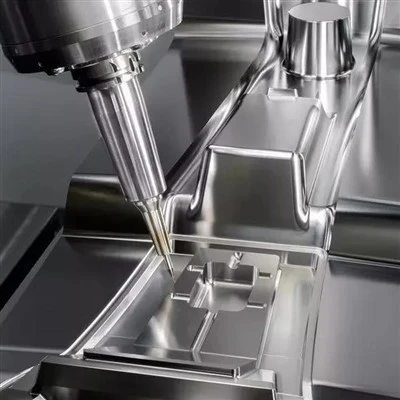
If you’re working on a project and wondering if a large magnesium die-cast part is feasible, don’t just stick to small, standard parts because you think size is limited. A lot of engineers assume magnesium can’t do big parts, but that’s outdated. We’ve helped clients shave 20% off the weight of their EV components by switching from aluminum to a 1,200mm magnesium die cast part, and that’s a huge win for range and performance.
5 Axis CNC Machining If you’ve got a project in the works, whether it’s a small consumer part, a mid-sized automotive component, or a large structural part, reach out to our team to chat. We can review your design, run a quick feasibility check, and give you a clear idea of what size we can deliver, no fluff, no hidden fine print.
References
- American Foundry Society. (2022). Magnesium Die Casting: Alloy Selection and Process Limits. AFS International.
- Die Casting Development Council. (2023). Large-Format Magnesium Die Casting for Automotive and Aerospace Applications. DCDC Technical Report.
- Buchholz, S., et al. (2021). Advances in Semi-Solid Magnesium Die Casting for Ultra-Lightweight Structural Parts. Journal of Materials Processing Technology, 298, 117245.
Shenzhen Shunhaoda Technology Co., Ltd.
With abundant experience, we are one of the most professional magnesium die casting manufacturers and suppliers in China. If you’re going to buy bulk high quality magnesium die casting made in China, welcome to get free sample from our factory. Also, custom service is available.
Address: 902, Building A3, Tianrui Industrial Park, No. 35 Fuyuan 1st Road, Zhancheng Community, Fuhai Street, Bao’an District, Shenzhen
E-mail: sales@shdindustry.com
WebSite: https://www.shd-industry.com/
