Hey there, fellow pump users! I’m Jake, and as someone who’s been working on rotary lobe pumps for over 10 years—both as a technician and now as part of a team that supplies these bad boys—I get it. These pumps are workhorses, right? You run ‘em day in and day out moving everything from food-grade syrup to wastewater sludges, and when they start slowing down or breaking, it messes with your whole operation. No one wants unexpected downtime, especially when a replacement can set you back a few grand. So today, I’m breaking down exactly how you can extend your rotary lobe pump’s lifespan—stuff I’ve seen work on hundreds of units, not just theory. Let’s dive in. Rotary Lobe Pump

First off, let’s cut to the chase: most pump failures aren’t because the pump is cheap or low-quality. They’re because of small, consistent mistakes people make that add up fast. I’ve had a customer come to me last month whose 5-year-old pump was sputtering, and it turned out he never checked the oil level. Another guy overused the wrong type of flush fluid, and his rotors seized within a year. So let’s start with the basics that no one skips, but everyone forgets.
- Nail Down That Regular Maintenance Routine (But Don’t Overdo It)
Maintenance is non-negotiable, but here’s the thing: over-maintenance can be just as bad as no maintenance. I’ve seen a tech take apart a perfectly good pump every month “just to check,” and end up misaligning the rotors so bad it caused wear within 6 months. What’s the sweet spot? For most industrial applications (the ones you’re probably running), a weekly quick check and a full strip-down every 6 months is standard—unless your pump is running 24/7 in a super harsh environment (like heavy sludge with abrasive particles), then bump that full check to every 3 months.
The weekly check is easy: grab your flashlight, pop open the inspection port, take a look at the rotors. Are they coated in gunk? Is there any weird buildup on the housing walls? Next, check the seal—leaks here are a red flag. If you see slow seepage, that’s your cue to adjust the flush flow (we’ll talk about flush later). Don’t skip the oil level either—most rotary lobe pumps use a gear oil in the drive case, not the process fluid. Overfilling causes foaming, which ruins lubrication; underfilling leads to metal-on-metal wear in the gears. I always tell customers to mark the minimum and maximum lines on the sight glass with a Sharpie so you never guess.
For that quarterly (or semi-annual) full strip-down, you don’t need to be a certified mechanic—just follow the manual that came with your pump. Here’s what to focus on when you’re in there: rotor clearance. That’s the tiny gap between the rotors and between the rotors and the housing. If it’s wider than 0.5mm (for most standard models), that’s when efficiency drops and wear speeds up. Also, check the drive shafts for runout—if they wobble more than a hair when you spin them by hand, you need to align them. Pro tip: when you’re putting it back together, use a high-quality thread sealant on the bolts (not too much, just enough) to prevent leaks without gunking up the works.
- Fluid Handling: Don’t Let Gunk Ruin Your Pump
Rotary lobe pumps move all kinds of fluids, but here’s the secret: what goes into the pump is just as important as the pump itself. If you’re pumping abrasive stuff (like sand-laden wastewater or mineral slurries), you can’t skip the inlet strainer. I’m talking a 100-mesh minimum—if your strainer is bigger than that, you’re letting small particles slip through that act like sandpaper on the rotors and housing. I had a customer once who ran his pump without a strainer for 8 months, and he had to replace the rotors and housing because of abrasive wear—cost him twice as much as the strainer would’ve.
Also, pay attention to the viscosity of your fluid. Rotary lobe pumps are positive displacement, so they handle high viscosity great, but pushing a fluid that’s way thicker than the pump’s rated capacity will strain the motor and the rotors. If you’re pumping something super thick (like molasses or heavy oil), make sure the pump is rated for that viscosity, and don’t run it at more than 80% of its maximum speed. Running it at full tilt for thick fluid is like revving your car to the red line every time you stop—you’re asking for trouble.
Another thing: seal flush. Most people ignore this, but it’s the #1 cause of seal failure. The flush fluid isn’t just for cooling—it’s for keeping the process fluid from building up on the mechanical seal. If you’re pumping something sticky (like jam or glue), the seal will get coated in gunk and wear out in 3 months if you don’t have proper flush flow. We supply pumps with adjustable flush ports, so set the flow rate to the sweet spot—just enough to keep the seal clean, not so much that it dilutes your process fluid (if that’s a concern). For food-grade applications, make sure your flush fluid is also food-grade—no tap water with chemicals that can contaminate your product.
- Operation Habits: How You Start and Stop Matters
I see people start their pumps wrong all the time, and it’s killing their lifespan. Let’s get this straight: never start a rotary lobe pump against a closed outlet valve. That creates a sudden pressure spike that can crack the housing or bend the rotors. Always open the outlet valve before starting, and for heavy fluids, warm them up first if they’re cold. For example, if you’re pumping viscous oil at 5 AM when the warehouse is cold, the oil is thicker, so warming it to 40°C (104°F) first reduces the load on the motor and the pump parts.
Also, don’t let the pump run dry. Even a minute of dry running can cause the mechanical seal to overheat and burn out, and the rotors to seize. If there’s a shutdown, make sure you drain the process fluid from the pump housing to prevent it from drying and building up. For long-term storage, fill the housing with a neutral fluid (like mineral oil) to keep rust away—iron oxide is a silent killer for metal parts.
Another operation tip: don’t use the pump to push solids that are too big. Rotary lobe pumps handle small solids, but if you’re pumping something like whole rocks or large food chunks, that will get stuck between the rotors and cause a jam. Jams are bad—they can stop the pump dead in its tracks, and when you force it to start again, you’re putting massive stress on the gears and rotors. Add a solids separator at the inlet if you’re regularly handling large particles, and always shut down the pump immediately if you hear a weird grinding noise—that’s a jam or wear, not normal operation.
- Parts Replacement: Buy Quality, Not Cheap
When a part does wear out, I get it—you want to save money by buying generic parts, but that’s a mistake. Generic rotors or seals might fit, but they’re made from lower-quality materials that wear out 2x faster. We supply genuine replacement parts (and I’m not just saying that—we’ve tested both) that are made from materials like nitrile rubber for seals (great for chemicals and abrasion) and cast iron for rotors (stronger, more durable than generic alternatives).
Wait, but what if you’re on a budget? There are ways to save. For example, if your seal is leaking, you can just replace the seal faces instead of the whole seal assembly (we offer seal face kits that are half the cost). But don’t skimp on the critical parts: the drive shafts, the gear oil, and the rotors. I’ve seen customers buy a $50 generic rotor instead of our $150 one, and within 3 months, the generic one was worn, and they had to replace the rotors and housing anyway—total cost was $400, way more than if they’d just bought the genuine one.
Also, when you replace parts, make sure they’re compatible with your pump model. A lot of people mix up parts for small lobe pumps vs. large ones—they look similar, but the clearance is different, so you end up with misaligned rotors. If you’re not sure, just reach out to the supplier (that’s us, by the way) and we can help you get the right part. No need to guess.
- Environmental Factors: The Warehouse Matters
You might not think about it, but where you put your pump affects its lifespan. If you’re running it in a damp, corrosive environment (like a wastewater treatment plant with high humidity or chemical fumes), rust will build up on the housing and drive shafts over time. That’s why we supply our pumps with a corrosion-resistant coating for harsh environments—it adds a bit to the cost, but saves you thousands in premature replacements.
Keep the pump area clean, too. Dust, debris, and spilled fluids can get into the drive case and cause the gears to wear. If your pump is running outdoors, cover it with a waterproof cover when it’s not in use, and check for leaks after heavy rain. For pumps in cold climates, make sure to drain the process fluid in winter—freezing water will crack the housing, and that’s a repair no one wants to deal with.
Now, let’s be real—even with all this, parts will wear out eventually. But if you follow these tips, you can get 8-10 years out of a rotary lobe pump, instead of the 3-5 that most people get with careless maintenance. I’ve got a pump installed at a brewery that’s been running 24/7 for 9 years now, moving wort and yeast, and the only parts we’ve replaced are the seals twice. That’s not luck—that’s consistent, simple care.
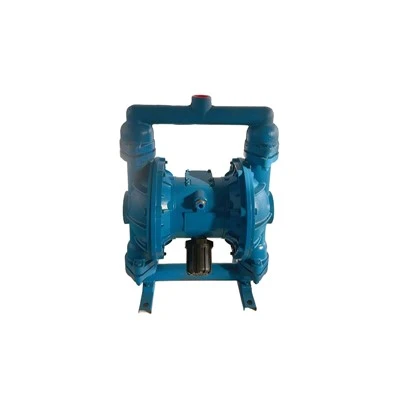
If you’re struggling with your current pump, or you’re looking to invest in a new one that’s built to last and easy to maintain, feel free to reach out. We’re a supplier that doesn’t just sell pumps—we help you keep them running. Whether you need a consultation on maintenance, replacement parts, or a custom pump for your specific application, we’re here to help. Let’s make sure your pump works as hard as you do, for as long as possible.
Diaphragm Pump References
- Pump Maintenance Fundamentals. Hydraulic Institute, 2021.
- Rotary Lobe Pump Operation and Best Practices. World Pumps Magazine, 2022.
- Wear Mechanisms in Positive Displacement Pumps. Journal of Process Mechanical Engineering, 2020.
- Corrosion Protection for Industrial Pumps. Industrial Corrosion Journal, 2023.
Botou Hengyang Pump & Valve Co., Ltd.
With abundant experience, we are one of the most professional rotary lobe pump manufacturers and suppliers in China. Please feel free to buy high standard rotary lobe pump made in China here and get pricelist from our factory. All customized pumps are with high quality and competitive price.
Address: No. 159, Road 1, Development Zone, Botou City, Cangzhou, Hebei Province, China
E-mail: bthdbf@163.com
WebSite: https://www.hyoilp.com/
