Hey everyone, it’s Jake here, account manager over at your go-to rectifier transformer supplier—we’ve been fielding so many questions lately about how our gear holds up when things go sideways, especially short circuits. Let’s be real: when you’re running a high-power operation—think industrial smelting, EV charging stations, or big battery energy storage systems—short circuits aren’t a “if” scenario, they’re a “when” scenario. And if your rectifier transformer isn’t built to handle that, you’re looking at hours (or days) of downtime, lost production, and big repair bills. So today, I’m breaking down exactly how our units tackle short circuits, no stuffy jargon, just what you actually need to know. Rectifier Transformer
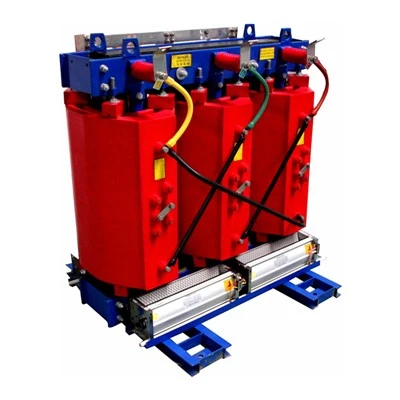
First off, let’s keep this simple: what even is a short circuit for a rectifier transformer? Unlike a regular power transformer, these bad boys are paired with rectifiers that turn AC to DC for high-current, low-voltage loads. A short circuit here doesn’t just mean a wire touching a wire—it’s when that DC side has a fault, like a metal chunk falling into a smelter tank, or a miswired connection on a charger, that causes current to spike way beyond the transformer’s rated capacity. Like, we’re talking 10 to 20 times the normal current, and that hits in just a few milliseconds—faster than you can blink, way faster than most circuit breakers kick in. If your transformer isn’t built to absorb that sudden, intense stress, you’re looking at bent windings, cracked insulation, or a total unit failure. That’s where our design choices come in, and this is what makes us different from the no-name off-the-shelf units you can get online.
Let’s start with windings—this is the workhorse of how we handle short circuits. A lot of cheap transformers use random-wound windings, where the copper coils are just stacked willy-nilly inside the core. When a short hits, all that extra current creates huge electromagnetic forces that try to yank the windings apart or squeeze them together. Random windings can shift, rub against each other, or snap right there, especially if the forces are uneven. We use what’s called a continuous transposed winding (CTW) for all our rectifier transformers. Wait, don’t zone out—here’s the real talk on why this matters: we twist the copper strands together so they stay aligned, and we pressure-fit every layer of winding with high-grade insulation paper. It’s not just cramming paper in there; we use a special resin that cures under high heat to lock the whole winding into a solid, rigid block. That means when that spike hits, there’s no shifting. We actually test this part ourselves—before any unit leaves our shop, we simulate a full short circuit in our in-house lab, and I’ve seen it first-hand: cheap transformers’ windings will move a full inch, our? Nothing. They stay exactly where they’re supposed to.
Next up, core design. You might think the core is just the metal frame holding the windings, but nope—it’s a big part of short circuit handling too. When current spikes, the core gets hit with magnetic forces that can pull the whole core apart if it’s not secured right. We use a step-lap core design, which is just stacking thin metal sheets in overlapping steps instead of big solid chunks. Why? It cuts down on energy loss, but more importantly, it lets us clamp the core together with heavy-duty steel bolts and non-magnetic brackets. We also add additional clamping rings at the top and bottom of the windings—these aren’t afterthoughts, they’re thick, cast aluminum rings sized specifically for our unit’s short circuit rating. I’ve heard horror stories from clients who bought generic transformers: their clamping rings were thin, bent during a short, and the whole core shifted, destroying the windings. We’ve never had that happen to one of our units.
Another big one is the tap changer and connections. A lot of people forget these tiny parts when thinking about short circuits, but they’re often the first to fail. Rectifier transformers need tap changers to adjust voltage as load changes, right? Cheap tap changers have loose, poorly machined connections that can arc or melt when current spikes. We use vacuum tap changers—no air gaps, no loose parts—because when you’re switching taps, you’re doing it with a vacuum, so there’s no sparking. We also torque every connection in the unit to a exact spec during assembly, and we re-test them under short-circuit current loads before shipping. I remember a client last year who had a short take out a competitor’s transformer’s tap changer and related busbars; they had to shut down their smelter for 3 days. Our client, who switched to us, had a similar short last month—their tap changer held, no issues, and they were back up in 4 hours. That’s the kind of difference we’re talking about.
Wait, also—let’s talk about cooling, which ties directly into short circuit handling. When a short hits, even for a millisecond, the windings generate way more heat than normal. If your cooling system isn’t built to handle that surge, the insulation can break down even after the short is over, leading to a latent failure. Our units use forced oil circulation with directed cooling—we don’t just dump oil around the core, we pipe it directly to the hottest spots on the windings. We also add temperature sensors at every critical point, so if even the tiniest heat spike happens during a short, the system will trigger a trip before damage happens. Some competitors use passive cooling for their cheap units, which can’t keep up with that extra short-circuit heat.
Let’s get real for a second—no design is perfect, but what makes us stand out is that we don’t cut corners on testing. We know that specs on a datasheet are great, but the only way to know a transformer handles short circuits is to test it like it’s actually going to face a short. Every single one of our rectifier transformers goes through two key tests before it leaves our facility: the dynamic short circuit test and the thermal short circuit test. The dynamic test hits the windings with a full 1-second short circuit (way longer than most real-world shorts, which are like 0.1 seconds) and we measure how much the windings shift, how much core force is generated, and if any parts move. Our limit is 0.1mm of winding shift—most cheap units have a limit of 1mm, which is a world of difference. The thermal test simulates the heat from a sustained short to make sure the insulation doesn’t melt or degrade. We’ve seen competitors’ units pass the datasheet spec but fail the actual physical test, which is why we don’t trust paper specs—we trust hands-on testing.
I also want to address a common myth: “I don’t need a transformer that handles short circuits because my breaker will trip fast.” Newsflash—breakers aren’t perfect. Even the fastest circuit breakers take 2 to 5 milliseconds to trip, and in that time, current is still flowing through the transformer. A 5-millisecond spike is enough to damage a poorly built unit. We design our transformers to handle the full current spike during that trip time, so even if the breaker does its job, your transformer stays intact. That’s peace of mind, right? You don’t have to worry about another short ruining your whole operation just because your breaker is a split second slow.
Look, I’ve been in this industry for 12 years, and I’ve seen every mistake a company can make when it comes to selecting rectifier transformers. The number one regret I hear from clients who went with cheap units is that they saved a little money upfront but lost way more in downtime and repairs. Our rectifier transformers are built for the long haul—we engineer every part of them to absorb short circuit stress, test them to the extreme, and stand behind them with a 5-year warranty that actually means something, not the fine-print garbage that says “only covers manufacturer defects not caused by shorts.” Wait, no—actually, our warranty does cover short circuit damage if it’s a design flaw, which is rare, but that’s how confident we are.
If you’re dealing with frequent short circuits, or you’re upgrading your system and want a transformer that can handle whatever comes its way, don’t waste time with the no-name options. Our team can work with you to size the exact right unit for your application—whether it’s a small 1MW DC charger or a 50MW smelting operation. We’ll walk you through the specs, answer any questions you have, and even share real case studies from other clients who dealt with the same short circuit issues you’re facing.
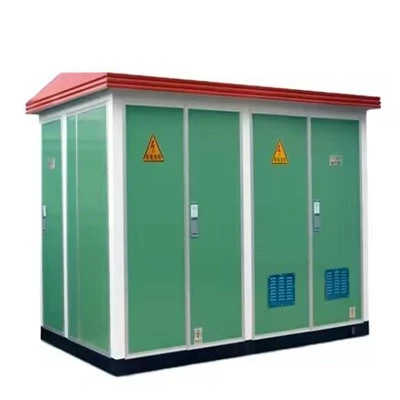
At the end of the day, a rectifier transformer’s job isn’t just to convert AC to DC—it’s to keep your operation running when things go wrong. We don’t build transformers that fall apart when a short hits; we build ones that stand up to it, every single time. If you’re ready to stop dealing with downtime from transformer failures during short circuits, hit us up to talk through your project. We’re here to help you find the right solution, no pressure, no fancy sales pitches.
Three Phase Oil Immersed Transformer References
- IEEE C57.12.90, Standard Test Code for Dry-Type and Liquid-Immersed Distribution, Power, and Regulating Transformers
- National Electrical Manufacturers Association (NEMA) Standard TP 1, Short-Circuit Strength of Power Transformers and Reactors
- Transformer Design Principles: With Applications to Core-Form Power Transformers, 2nd Edition, Mark R. Shah and Terrence M. Mulcahy
Zhejiang Jiangshan Hengli Electrical Co., Ltd.
Zhejiang Jiangshan Hengli Electrical Co., Ltd. is one of the most professional rectifier transformer manufacturers and suppliers in China, featured by quality products and low price. Please rest assured to wholesale cheap rectifier transformer in stock here and get pricelist from our factory. Customized orders are welcome.
Address: 212 Fuzhu Street Sidu Town, Jiangshan, Zhejiang, China
E-mail: henglijs@foxmail.com
WebSite: https://www.henlypower.com/
