If you’ve ever reached out to an OEM metal parts supplier for a quote, you’ve probably encountered one line that makes or breaks your order: “What’s your minimum order quantity?” For years, I’ve fielded this question from startups, contract manufacturers, and large aerospace firms alike, and I’ve learned it’s not a one-size-fits-all number. As someone who’s spent 12 years on the floor of our facility, watching laser cutters whir, press brakes bend steel, and quality inspectors run batch tests, I can tell you the MOQ for OEM metal parts isn’t a arbitrary rule—it’s a balance of production costs, materials, and the trust we build with every client. Let’s break down how we land on a number that works for everyone, no matter if you’re ordering a handful of prototype brackets or 50,000 automotive chassis components. OEM металлические детали
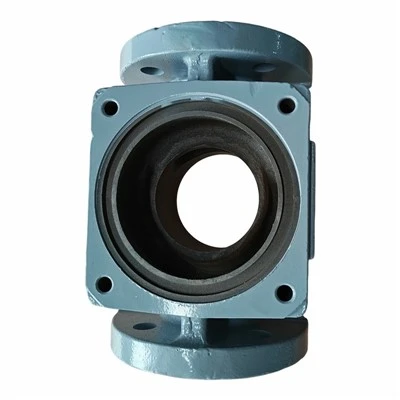
First, let’s get one thing straight: MOQ for OEM metal parts is rarely about setting a sales quota. Most of our smaller clients, like startup medical device engineers, come to us with prototypes—often just 10 or 20 pieces—and we don’t turn them away. Where MOQ starts to matter is when a client moves past prototyping to full production, or when they need parts made from specialized materials that carry higher setup or inventory risks. The confusion often comes from not understanding what goes into the cost of making a single metal part, because that’s the root of our MOQ.
Take setup time, for example. When we get a new order, the first step isn’t cutting metal—it’s programming our CNC machines to cut the exact dimensions, bending angles, and hole tolerances the client needs. For a simple aluminum bracket, that programming might take 30 minutes. For a custom stainless steel valve housing with 12 tight-tolerance holes, that programming can take 4 hours. Then there’s tooling: if the part requires a custom punch, die, or fixture, we have to machine or source that tooling before production even starts. That tooling might cost $500 for a small bracket, or $5,000 for a complex assembly. Now, if we only make 10 of those complex housings, that $5,000 tooling cost split across 10 parts means each part’s cost is $500 just for tooling—way higher than a client’s budget. If we make 1,000, that $5 per part, which is manageable. That’s where MOQ comes in: it’s the number that lets us spread those fixed setup and tooling costs so the variable cost of each part doesn’t become unreasonable.
Materials are another big factor. Not all metal is the same, and some comes with minimums of its own. If you order a custom thickness of titanium, for example, metal suppliers only sell full sheets or bars of that material—often 20 feet long. If your part only needs a 2-foot piece, you’re stuck with 18 feet of leftover metal that you can’t use for anything else, which is a waste. We build that into our MOQ: for a titanium bracket, our MOQ is 200 pieces, because that’s how many parts we can cut from a standard full sheet without wasting material, and we don’t have to charge you for the unused metal. For more common materials like cold-rolled steel, which we can often source in partial sheets, our MOQ is lower—sometimes 50 pieces, because we don’t have to absorb the cost of unused material. There’s also the issue of specialty finishes: powder coating, anodizing, or plating. Most finishers charge a setup fee for each batch, regardless of size, so if you only have 5 parts, the setup fee makes each part’s finish cost 10 times higher than it would for a batch of 500. That’s another reason MOQ exists: to keep finish costs fair for everyone.
But here’s the thing: MOQ isn’t a hard line that we refuse to cross, especially for new or small clients. Last year, we had a client who was launching a line of custom camping stoves, and they needed 25 stainless steel burner brackets for their first production run. Our usual MOQ for that part was 100, but we worked with them: we used leftover tooling from a similar part we’d made a few months prior, so we didn’t have to make new fixtures, and we ran their order in a small batch between two larger jobs to minimize setup time. We still turned a small profit, and they got the parts they needed without paying for 100 extra brackets they couldn’t sell yet. That’s the part of MOQ most suppliers won’t tell you: it’s a flexible guideline, not a strict rule, designed to make orders feasible for both sides, not just the supplier’s bottom line.
That said, there are cases where MOQ is non-negotiable, and those almost always tie to specialized or high-risk production. For example, if a client needs parts for aerospace or medical devices, which require rigorous traceability and batch testing. Those tests—material certifications, non-destructive testing, dimensional inspections—cost money, and we have to run them per batch, not per part. If we only make 10 parts, we have to run the same full set of tests as we would for 1,000, which means those tests get split across fewer parts, driving up their cost. For a medical implant component, our MOQ is 500 pieces, because that’s the smallest batch where the testing cost per part stays within what makes sense for the client to pass regulatory requirements. Similarly, for parts made from rare materials like Inconel for high-temperature industrial equipment, the lead times and material costs are so high that we need a batch large enough to justify holding inventory, rather than making the part only when ordered.
A lot of new clients assume that all OEM metal parts have the same MOQ, but that’s not true—we’ve had clients ask for MOQs that range from 1 prototype piece to 100,000 pieces, and each number is tailored to their specific part. For example, a simple steel bracket might have an MOQ of 50, a complex aluminum heat sink with tight tolerances might have an MOQ of 200, and a custom titanium aerospace fastener might have an MOQ of 1,000. The key is being transparent about why that number exists. We don’t hide our MOQ behind vague language; when a client asks, we explain: “This part needs a custom tooling setup that costs $1,200, and we can spread that over 50 pieces for $24 each, which is fair, but if you only need 10, that’s $120 per part, which is more than the part itself is worth.” That clarity goes a long way in building trust, rather than making clients feel like we’re setting arbitrary hoops.
Another common misconception is that higher MOQs always mean higher quality. That’s not the case, either. We have clients who order 1,000 prototype parts for testing, and we hold their tooling for future orders so they don’t have to pay setup fees again when they move to production. For long-term clients, we’ll also adjust MOQs as their orders grow. A startup that ordered 50 brackets for their first run might order 5,000 a year later, and we’ll lower their MOQ to 100 because they’re a repeat customer, and we’ve already built the tooling and setup familiarity. MOQ should be a mutual agreement, not a one-time requirement that locks clients in.
I’ve seen too many new metal part suppliers come in with rock-bottom MOQs, like 10 pieces for a complex part, and then the client gets a quote that’s twice what they expected because the supplier skipped setup, used cheap, uncertified materials, or cut corners on quality to make up for low volume. At the end of the day, if an MOQ is too good to be true, it probably is. The MOQ should reflect the actual cost of producing a quality OEM metal part, not just a number to win a bid. For us, that means balancing our overhead, material costs, and client needs, so every order we fulfill is profitable for us and affordable for the client.
If you’re in the market for OEM metal parts and you’re not sure what MOQ works for your project, don’t hesitate to reach out. We can’t always bend our MOQ on specialized or high-tolerance parts, but we’re always happy to walk through the factors that go into the number, so you can make an informed decision. We’ve worked with clients across every industry, from small startups to Fortune 500 companies, and we treat every order like it’s our most important one. There’s no such thing as a too-small project, and we’re here to help you get the parts you need, whether it’s a single prototype or a full production run.

Don’t hesitate to get in touch to discuss your OEM metal part requirements and find the right order quantity for your project.
Auger Drilling Parts References
ASM International. (2018). Metal Fabrication Costs: A Guide for Estimation. ASM Handbook Volume 14: Forming and Forging, 1–12.
Groover, M. P. (2020). Fundamentals of Modern Manufacturing: Materials, Processes, and Systems (7th ed.). Wiley.
Society of Manufacturing Engineers. (2021). Minimum Order Quantities in Custom Manufacturing: Best Practices for Suppliers and Buyers. SME White Paper.
Ningbo Tanxi Import & Export Co., Ltd.
As one of the most professional OEM metal parts manufacturers and suppliers in China, we’re featured by quality products and good service. Please rest assured to buy bulk OEM metal parts at competitive price from our factory. We also accept customized orders.
Address: Suite 801, 258 Tiangao Lane, Yinzhou Southern Business District, Ningbo 315100, P.R. China.
E-mail: andy@tx-drilling.com
WebSite: https://www.tx-wearparts.com/
