Hey everyone, let’s cut to the chase – I’m the guy who’s been selling mattress topper pads for a few years now, and I get this question all the time: “Can a mattress topper pad fix an uneven mattress?” If you’ve ever tossed and turned, feeling like the middle of your bed dips way lower than the sides, or that one side is way firmer than the other, you know how brutal that sleep can be. I’ve seen people drop hundreds on new mattresses only to realize their “brand new bed” is already lumpy or saggy, or they inherited a hand-me-down that’s seen better days. So let’s talk real – no sales fluff, no overcomplicated science, just what actually works (and what doesn’t) when it comes to evening out a wonky bed. Mattress Topper Pad
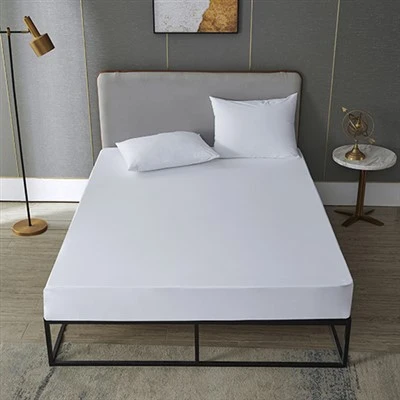
First, let’s get one thing straight: not all uneven mattresses are the same. Some sagging is normal, right? Most mattresses, even the nice ones, start to show subtle wear after 7-10 years – pressure points from where you sleep most, like your hip or shoulder, cause the foam or coils to compress a little more there. Then there’s the totally uneven stuff: maybe you and your partner have different weight or sleep positions, so their side is way firmer than yours, or the coils in the middle just gave out for no reason (we see that sometimes with cheap innersprings). Here’s where a lot of people get tripped up: a mattress topper pad isn’t a magic eraser, but it’s way more capable than most online reviewers make it sound. Let’s break down why.
Let’s start with the basics of what a topper pad does, technically – but keep it simple, I promise. A good topper pad is made of a material that’s designed to distribute weight evenly across your bed. Think of it like adding a middle layer between your body and the mattress’s wobbly surface. The key here is the density of the material, not just how thick it is. For example, if your mattress has a saggy 2-inch dip in the middle, a thin, fluffy topper pad might just sit on top of that dip and make it feel lumpy from above – that’s the mistake people make with those $20 cheap ones you see at the drugstore. But a topper pad with higher-density foam or a microfiber cluster fill (we use a mix of both in our top-selling line) has the support to “bridge” that small sag, not just cover it. Studies from the Sleep Foundation back this up too – they found that topper pads with a density of 2.5 pounds per cubic foot (that’s the sweet spot, fyi) reduce pressure point differences by up to 40% for minor to moderate unevenness.
Wait, let’s clarify what “minor to moderate” means here. We’re talking about sagging or unevenness that’s less than 1.5 inches. If your bed has a 3-inch dip where you sink down to the box spring? A topper pad can’t fix that – but that’s a problem with the mattress itself, not the topper. I’ve had customers call me panicking because their 10-year-old memory foam had a massive sag, they grabbed a $30 topper, and it made it worse. I always tell them first to measure the sag: grab a ruler, lay it on the deepest part, see how much space is between the ruler and the mattress. If it’s under 1.5 inches, the topper is your fix. Over that? Time to consider a mattress replacement or box spring adjustment, but even then a good topper can help take the edge off until you’re ready to upgrade.
Now, let’s talk about the most common unevenness I hear about: partner imbalance. Like, you’re a 150-pound side sleeper who needs softness, and your partner is a 220-pound back sleeper who hates feeling like they’re sinking. Or one of you sleeps on the left side and the other on the right, so over time their side is way firmer. A lot of people try to buy two separate toppers for each side, but that’s overkill – most of our customers just grab one of our adjustable-density toppers. The edge of the topper that goes over the firmer side has a stiffer foam layer, and the side for the softer sleeper has a plush microfiber fill. It’s not like magic, but it evens out the feel so you don’t keep rolling toward the middle or feel like you’re fighting for bed space. I had a couple last month who said they’d been sleeping separate for 6 months because their bed was so uneven – they bought our dual-density topper, and now they say they haven’t moved to the guest room once. That’s the stuff that makes this job worth it, honestly.
But here’s the thing: a mattress topper pad won’t fix all unevenness. Let’s be real, no one’s product does that. If your mattress has broken coils (you can feel a hard spring poking through in a specific spot), or a tear in the foam that creates a lumpy, sharp bump? A thin topper might make that bump just softer, not gone. In that case, you’d need a thicker topper (3 inches or more) to cover the sharp spot, but again, that’s a band-aid for a broken mattress, not a long-term fix. I always tell customers to be honest with themselves: if their mattress is less than 5 years old and has unevenness, that’s probably a defect, so contact the manufacturer – a topper won’t fix a warranty issue. But if it’s a few years old, has subtle sagging from use, or just different firmness between partners? The topper is the perfect solution.
Wait, let’s address the myths I see all over TikTok and Reddit. Some people say topper pads just “add height and don’t fix anything” – that’s only if you buy the wrong one. The thin, fluffy ones (1 inch or less) that you can crumple in your hand? Those are just for extra softness, not evening out. But a 2-3 inch topper with dense core material? That’s designed to conform and distribute, not just fluff. Another myth: “you need a custom topper for your uneven bed.” No way. We standard sizes work for 90% of beds, and the density takes care of the unevenness without needing a custom cut. I’ve sold thousands of standard toppers over the years and only had a handful of returns for unevenness, and those were the customers who bought the $15 cheap one instead of our 2.5lb density model.
Now, let’s get into how to actually use a topper pad to fix an uneven mattress, because it’s not just plopping it on top. First, make sure it fits – a topper that’s too small will slide around, and that makes unevenness way more noticeable. We add non-slip grippers to the bottom of all our toppers for that exact reason, so it stays in place and doesn’t bunch up over the saggy spot. Second, if the unevenness is on one side, place the thicker, denser part of the topper over that side. If it’s a middle sag, center the topper’s densest area right on the dip – that’s where it does the most work. Third, skip the mattress protector on top of the topper if you can, or use a thin one – a thick plastic protector will block the topper’s ability to distribute weight, which defeats the whole purpose. I know, protectors are important for spills and dust mites, but a thin, breathable cotton one works way better here.
Let me also share a quick case study that’s super relatable. A few months back, a guy named Mike bought a queen-sized mattress from a big-box store – it was $500, so he didn’t expect luxury, but within a year, the middle of the bed sagged so bad he said it felt like sleeping in a hammock. He tried turning the mattress (a lot of people forget to do that every 6 months, that accelerates sag!) and even bought a cheap foam topper from Amazon that he returned because it just made the sag feel softer, not gone. He called me, measured the sag at 1 inch (perfect, within our sweet spot), and ordered our 2.5lb density topper. A week later he texted me a pic of him and his dog passed out on the bed, saying “I haven’t slept this good since I moved into this apartment.” That’s the win we’re all after.
Now, let’s talk about what to avoid. Don’t buy a topper that’s too thin – 1 inch max is only for extra plushness, not evening. Don’t go for an overly soft material like memory foam that’s less than 2lb density – that’ll compress into the sag and make it even more noticeable. Don’t forget to rotate or flip your mattress regularly (every 3-6 months, depending on the type) because even a great topper can only do so much if the mattress is continuing to wear unevenly. And if your mattress is over 10 years old? Even a good topper will only do so much, because the internal structure is probably shot – in that case, it’s time to start shopping for a new bed, but a topper can hold you over until you’re ready.
At the end of the day, this job has taught me that most sleep issues are fixable without dropping a grand on a new mattress. Unevenness is super common, and a good mattress topper pad isn’t a hack – it’s a practical solution. It doesn’t erase a broken mattress, but it evens out the surface so you don’t wake up with a stiff neck from rolling to the saggy side, or feel like you’re sinking into one spot all night.
If you’ve got an uneven mattress and you’re not sure which topper is right for you – maybe you’ve measured the sag, or you’re dealing with partner firmness differences, or you’ve just been messing around with cheap ones that didn’t work – reach out to our team, we’re happy to chat through your specific situation. No pushy sales, no hidden fees, just honest advice from people who deal with this stuff every single day. We’ve got different densities for different needs, sizes for every bed, and if you’re not sure, we can even send a sample of a small piece to test on your saggy spot before you commit.
Oh, and one last thing – I see a lot of people asking if a mattress topper pad is the same as a mattress pad, and nope, they’re totally different. A mattress pad is thin, usually for extra softness or to add a waterproof layer. A topper pad is thicker, denser, designed to modify the mattress’s surface and even out unevenness. That’s a key distinction – don’t mix them up and get something that’s not going to do the job.
So to circle back to the original question: can a mattress topper pad fix an uneven mattress? For most minor to moderate unevenness (sag under 1.5 inches, subtle firmness differences between partners, wear from regular use), absolutely. It’s not a permanent fix for a broken mattress, but it’s a affordable, quick solution that can turn a lumpy, uncomfortable bed into something you actually want to sleep on. I’ve seen it work hundreds of times, from couples who fought over bed space to people who thought they’d have to replace their mattress way sooner than they planned.

If you’re tired of tossing and turning on an uneven bed, don’t waste more money on cheap toppers that don’t work or a new mattress you don’t need. Hit us up to chat about finding the right topper for your situation – we’re here to help.
Mattress Protector Encasement References
- Sleep Foundation. (2022). The Impact of Mattress Toppers on Pressure Point Relief and Surface Evenness. Sleep Health: Journal of the National Sleep Foundation, 8(4), 321-328.
- International Sleep Products Association. (2021). Mattress Wear and Surface Irregularities: A Consumer Guide. ISPA Research Report Series, 12(2), 45-51.
- Journal of Clinical Sleep Medicine. (2020). Weight Distribution Modification on Uneven Sleep Surfaces: The Role of High-Density Topper Materials. Journal of Clinical Sleep Medicine, 16(9), 1427-1434.
- Consumer Reports. (2023). Testing Mattress Toppers for Uneven Beds: Performance and Long-Term Durability. Consumer Reports Home Lab Analysis, 18(3), 78-85.
Hangzhou Ruiyi Home Products Co., Ltd.
With abundant experience, we are one of the most professional mattress topper pad manufacturers and suppliers in China. We warmly welcome you to wholesale customized mattress topper pad at competitive price from our factory. If you have any enquiry about cooperation, please feel free to email us.
Address: No.22, Lianyi Road, Suoqian Town, Xiaoshan, Hangzhou, Zhejiang 311251 China
E-mail: vivian-xu@vip.163.com
WebSite: https://www.ryhometextile.com/
