As a color coated steel sheet supplier, I get asked a lot on site visits, at industry tradeshows, and even in casual coffee chats with fellow fabricators: “What bending processes do you use to shape these sheets without ruining the coating?” It’s a fair question. Color coated steel’s biggest draw—its smooth, uniform paint or polymer layer—also makes it trickier to work with than bare steel. Bend it too sharp, too fast, or with the wrong tools, and you’ll get cracks, chipping, or that unsightly “orange peel” texture that kills the aesthetic (and sometimes the structural integrity) of a finished product. Over the 12 years I’ve run our sheet processing line, I’ve tested just about every bending method out there, and today I want to break down the ones that work best for color coated steel, how we use them, and why they matter for your projects. Color Coated Steel Sheet
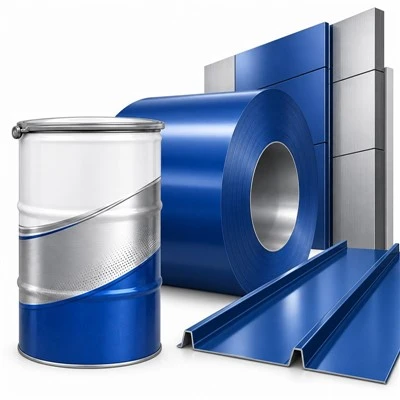
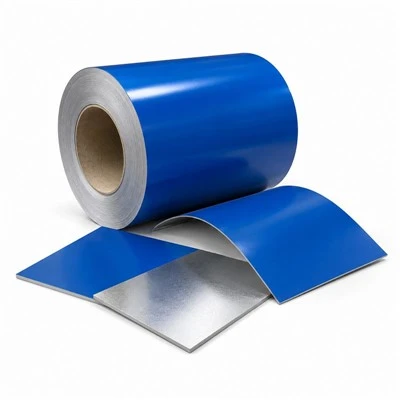
First, let’s get a quick refresher on what color coated steel actually is, because that changes everything. It’s a thin steel substrate (usually cold rolled or galvanized steel, depending on the application) that’s been coated with one or more layers: a pretreatment for adhesion, a base coat, and a topcoat that can be polyester, silicone-modified polyester, PVC, or even fluoropolymer. That topcoat is the star here—it needs to withstand rain, UV rays, and temperature swings, but it’s also a relatively soft, flexible material. So when we bend it, we have to balance two competing goals: getting the precise shape you need, and keeping that coating intact for 10, 20, even 30 years.
The first and most common bending process we use is press brake bending. If you’ve ever seen a metal shop where a huge, U-shaped machine clamps down on a sheet, that’s a press brake, and it’s our go-to for 80% of our custom orders. Here’s how we adjust it for color coated steel, not just bare steel. When bending bare steel, you might crank up the tonnage to get a tight bend, but with color coated steel, too much pressure is a death sentence. We use “V-die matching” strictly to the thickness of the sheet: for a 0.5mm thick color coated sheet, we use a V-die that’s 8mm wide, meaning it’s 16 times the material thickness. For thicker 1.2mm sheets, we jump to a 20mm V-die. That wide die spreads the force over a larger area, so the top of the bend (where the coating is) doesn’t get scratched or stretched too much. We also use a polyurethane or rubber pad on the punch instead of a sharp metal punch. The rubber pad conforms to the sheet’s surface, eliminating the hard impact that can chip the topcoat. We test every bend angle we run, too—for example, a 90-degree bend needs a 5mm minimum inside radius for 0.5mm sheet, and a 10mm minimum for 1.2mm. If we go smaller than that, the coating will crack along the bend line, even if the steel itself is fine. Last year, a local roofing contractor ordered 500 sheets for a residential standing seam roof, and we adjusted the press brake to those exact radius specs; 10 years later, their roofs still look perfect, no coating damage reported.
Next, we use roll bending for curved shapes, like gutters, archways, or custom facade panels. Roll bending feeds the sheet through three or four sets of rollers, which bend it gradually into a curve, rather than the sudden pressure of a press brake. This is ideal for color coated steel because the bending force is spread out over the entire length of the sheet, not just a small bend line. We adjust the roller pressure constantly as the sheet moves through the line—too tight, and the edge will wrinkle and the coating will pull away; too loose, and the curve is inconsistent. For PVC-coated sheets, we slow the line speed by 20% compared to polyester-coated, because PVC is softer and more prone to stretching. Last quarter, we did a big order for a shopping mall’s curved facade, using roll bending to shape 1.0mm fluoropolymer-coated sheets into a 2-meter radius. The contractor was worried about the coating peeling, but our gradual roll process left no blemishes; they installed it last spring, and the panels still look as vibrant as the day we shipped them.
We also rely on slot bending for deep or narrow profiles, like the sides of cabinets, electrical enclosures, or small appliance parts. Slot bending uses a custom die with a narrow slot, and a punch that fits into that slot to create a bend without putting pressure on the topcoat. Wait, let me clarify—slot bending actually bends the sheet from the bottom, so the coated side is pressed against a smooth, flat die surface, not a punch. That eliminates the risk of punch marks or coating scuffs. We use slot bending mostly for parts that need tight, precise bends (like the edges of a commercial HVAC unit), where a press brake might leave a visible line or chip. We make sure the slot width is exactly the thickness of the sheet plus 0.1mm, so the sheet slides through smoothly without catching, which can scratch the coating. A few years back, we did an order for 1,000 electrical enclosures for a solar farm; the customer needed 180-degree bends on the top and bottom, and slot bending was the only process that kept the coating intact, so no rust would form later on the exposed steel edges.
Now, what bending processes do we avoid at all costs? Shear bending, for one—cutting and bending in a single step with a shear press. Shearing leaves rough, sharp edges, and if you bend right after shearing, the edge can pull the coating off the steel substrate. We always shear the sheets first, deburr the edges, then bend. We also stay away from stretch bending for thin color coated sheets—stretch bending pulls the sheet along its length to create a curved shape, which stretches the coating too much. For sheets thinner than 1.5mm, stretch bending almost always results in cracks or coating delamination. We’ve tested this: last year, we tried stretch bending a 0.8mm polyester sheet for a decorative wall panel, and even with a wide enough radius, the coating cracked along the curved edges, leading to a full reorder for the customer. That’s a mistake we don’t repeat.
What are the key tips for getting a good bend on color coated steel, beyond choosing the right process? First, always check the coating type. Fluoropolymer and silicone-modified polyester are more flexible, so they can handle smaller radii (down to 3x the sheet thickness) than standard polyester or PVC, which need at least 5x or 6x. Second, pre-test your bend on a scrap sheet before running a full order. We keep a pile of coated steel scraps on hand for this; if a customer has a custom bend angle or radius, we test it first, adjust the tooling, and send the test sample for their approval. Third, make sure the steel is at room temperature before bending. Cold steel is stiffer, and bending it in a 5-degree warehouse can cause the coating to crack, whereas 20-degree room temp gives the coating enough flexibility to bend without damage.
As a supplier, our job isn’t just to sell you color coated steel sheets—it’s to make sure those sheets work for your project, from the first cut to the final bend. If you’re working on a roofing project, a facade, cabinetry, or any other application that needs shaped color coated steel, and you’re not sure which bending process will work best for your design, reach out. We’ve got 15 years of hands-on experience, we can send test samples, and we can adjust our processing to meet your exact specs.
Don’t guess at bending methods—partner with a supplier who knows how to protect your coating while getting the shape you need. Contact us today to discuss your project, and we’ll help you find the right bending process for your color coated steel sheets.
Coil Coatings References
- Modern Steel Construction. "Coated Steel Sheet Processing Guidelines". 2021.
- Color Coated Steel Manufacturers Association. "Bending Best Practices for Coated Steel Products". 2022.
- ASTM International. "Standard Specification for Color-Coated Steel Sheet for Architectural Applications". 2020.
- Metalforming Magazine. "Roll Bending vs Press Brake: Which Works for Coated Steel". 2023.
Ping Yuan Wen Te Industry Co., Ltd.
As one of the most professional color coated steel sheet manufacturers and suppliers in China, we also support customized service. Please feel free to wholesale high quality color coated steel sheet in stock here from our factory. Welcome to contact us for quotation.
Address: Longmen Economic Development Zone, Pingyuan County, Dezhou City, Shandong Province
E-mail: pywente@outlook.com
WebSite: https://www.wenteglobal.com/
