If you’re like most casual riders or even weekend warriors, you probably never think twice about the metal loop stretching between your bike’s crankset and rear wheel—until it slips mid-hill, skips on a gear change, or snaps right when you’re hitting your stride. But here’s the thing: that driving chain isn’t just a hunk of metal holding your pedals to your back wheel. It’s the unsung workhorse that turns your leg power into forward motion, and as someone who’s been deep in the driving chain game for years (supplying chains to bike shops, repair teams, and even custom builders across the country), I’ve seen how most people totally miss how it actually works. Let’s break this down, no fancy engineering jargon, just real talk about what makes that chain spin your wheels. Driving Chain
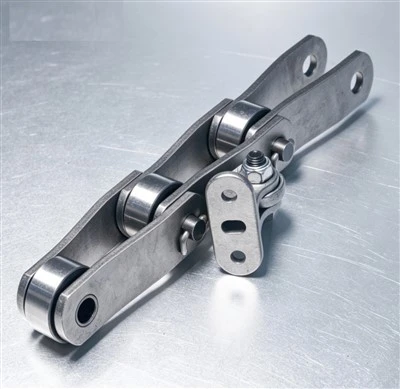
First off, let’s get the basics out of the way: what a bike driving chain actually is, physically. It’s a loop made of individual links, right? Most are either 1/2 inch pitch (that’s the distance between each pin that connects the links, for anyone wondering) which is standard for 99% of road, mountain, and hybrid bikes, though you’ll find narrower pitches for high-end road bikes that need lighter, more precise parts. Each link has two main pieces: inner plates and outer plates, held together by pins that sit in bushings between them. The rollers sit between the inner plates, and those are key—wait, yeah, the rollers are the little round things you see between each link, most people don’t notice them until they catch on a gear.
Now, the core job of the chain is super simple on paper: transfer torque (that’s the twisting force you put on the pedals) from your crankset (the chainring attached to your pedals) to the rear cassette (the stack of cogs on your back wheel). But how does it do that without just slipping or grinding into metal, you ask? That’s where the magic of how it engages with the gears comes in. When you push down on the pedal, the crank spins, which spins the front chainring. The chainring’s teeth aren’t smooth—they’re shaped like little ramps that fit perfectly into the gaps between the chain’s rollers. When the chain goes tight (that’s when you’re pushing hard, like climbing a hill or sprinting), the teeth of the chainring lock into those roller gaps, pulling the chain forward. That pulling motion pulls on the rear cassette’s teeth, which in turn spin the back wheel, moving the bike. No magic, just metal parts working in sync to turn your leg power into speed.
Wait, but why don’t the pins and plates just grind against the gears instead of the rollers? Oh right, that’s why rollers were invented. Back in the day, bikes used chain drives without rollers—just flat links that would slide across the gear teeth, causing way more friction, more wear on both the chain and gears, and way more noise. Rollers roll when they contact the gears, so they reduce friction big time, which means your power doesn’t get wasted as heat, and the chain and gears last longer. That’s a big deal for anyone who rides regularly, because replacing chains and gears gets expensive fast. I always tell my wholesale customers: when you pick a chain, don’t just go for the cheapest one. The quality of those rollers and how the links move makes all the difference in how efficiently the power transfers.
Let’s talk about what happens when you shift gears, because that’s where a lot of people run into problems, and it ties directly to how the chain works. Shifting works by moving the side of the chain (the part between the front and rear gears) sideways to jump from one gear tooth to another on the cassette or chainring. The derailleur (that little arm with the pulley wheels at the back, or the front derailleur near the crank) pulls the chain left or right, right? But here’s the thing: the chain has to be under a little tension to shift smoothly, which is why the rear derailleur has that spring that keeps the chain tight even when you’re on the smallest cog. If the chain is too loose, it’ll slip when you push hard, and shifting will be slow or clunky. If it’s too tight, it puts extra strain on the derailleur and the chain itself, leading to early wear.
Now, a lot of people think chain wear is just “it’s old,” but actually, it’s about how the pins and bushings wear out over time. Every time the chain cycles around the gears, the pins rub against the bushings inside the links, right? That friction (even with lubrication) causes tiny bits of metal to wear away, making the links stretch a little. Once a chain stretches about 0.5% (most bike maintenance guides say that’s when you need to replace it), the teeth on the gears won’t fit properly into the roller gaps anymore—so you get skipping, which is that frustrating feeling when you push down and the chain doesn’t move with the gear. As a chain supplier, I see this all the time: riders wait too long to replace their chain, and then they have to replace the cassette and chainrings too, which is way more expensive than just swapping out the chain when it’s stretched. That’s why I always push my clients to stock quality chains—they last longer, and save the rider money in the long run.
Wait, let’s get into the mechanical side a little more, because it’s not just about locking teeth. The driving chain is a roller chain, which is a specific type of chain designed for this exact purpose. Unlike other types of chains (like the ones on a winch or a motorcycle primary chain), bike chains are lightweight but strong, because bikes need to be nimble. The distance between each pin (that’s the pitch I mentioned earlier) is uniform, which is why it fits perfectly with the gears—each gear’s tooth is spaced to match that pitch, so every roller lines up with a gap. That uniformity is key; if you have a chain with inconsistent pitch, it’ll skip a gear or jump off entirely, which is why manufacturers make their chains to super tight tolerances.
Another thing people don’t realize: the chain’s lubrication plays a huge role in its working principle, too. Even though it’s metal on metal, a good chain lube reduces friction between the pins and bushings, so the links move smoothly as they go around the front and rear gears. If the lube dries out and gets dirty (from road grime, sweat, mud, whatever), the links don’t move as easily, which means more power is wasted pushing the chain around, and more wear on the parts. That’s why I always recommend to my customers that riders clean and lube their chain every 100-200 miles, depending on how and where they ride. A well-lubed chain isn’t just quieter—it transfers power more efficiently, so you go farther with the same amount of effort.
Let’s also bust a common myth: a lot of people think the chain only works when you’re pushing down on the pedal. But actually, when you’re coasting, the chain is still moving, it’s just not under tension. The rear derailleur takes up the slack, so the chain doesn’t flap around or fall off. That’s why derailleurs have that idler pulley (the little wheel on the back derailleur) that keeps the lower part of the chain tight even when you’re not pedaling. If that pulley is worn out, the chain will bounce around, leading to more wear and possible derailments. I’ve had so many conversations with riders who ignore worn idler pulleys, only to have their chain snap mid-ride. It’s a small part, but it’s part of how the whole driving chain system works.
Now, why does all this matter for you, whether you’re a casual rider, a bike shop owner, or someone who supplies parts? Let’s talk about what I see as a driving chain supplier. A lot of people treat the chain as an afterthought, but it’s the link (pun totally intended) between your body and your bike’s movement. A high-quality chain isn’t just more durable—it’s more precise, which means better shifting, less power loss, and fewer breakdowns. I’ve worked with riders who switched from cheap no-name chains to the quality chains we supply, and they told me they noticed a difference immediately—they could climb hills easier, shifting was smoother, and they didn’t have to replace their cassette every few months.
Wait, let’s touch on different types of driving chains, because that’s part of how they work too. For example, mountain bike chains are usually wider and stronger, because they take more abuse from rough terrain and hard acceleration. Road bike chains are narrower, to fit the tighter spacing of high-end cassettes and chainrings, which helps with aerodynamics and faster shifting. E-bike chains are even stronger, because e-bikes have way more torque from the motor, so the chain has to handle way more twisting force than a regular bike chain. If you put a standard road chain on an e-bike, it’ll snap instantly, which is why matching the chain to the bike type is super important. That’s the stuff I help customers with every day—making sure they get the right chain for their application, not just whatever’s cheapest.
Let’s wrap this up with the big picture: the driving chain works by turning rotational force from your legs (or your e-bike motor) into forward motion via a series of meshing teeth and rolling parts that minimize friction. It’s a simple system, but it’s got a lot of moving parts that have to work in perfect sync. Even if you don’t understand the engineering, paying attention to your chain—replacing it when it’s worn, keeping it clean and lubed—will make your ride smoother, extend the life of your other bike parts, and save you money.
If you’re a bike shop owner looking to stock reliable driving chains for your customers, or a rider who wants to upgrade their current chain for better performance and durability, I’d be happy to chat through what you need. No pushy sales talk, just real advice from someone who’s been in the bike parts game for years, and knows how important a good chain is to every ride.
Conveyor Chain References
- Wilson, D. G., & Papadopoulos, J. (2004). Bicycling Science (3rd ed.). MIT Press.
- Sheldon Brown’s Bicycle Technical Archive. (n.d.). Chain and Drivetrain Systems. Retrieved from Sheldon Brown’s Website.
- Park Tool. (2022). Chain Wear and Replacement. Park Tool Company Technical Manual.
Anhui Huihuang Chain Transmission Co., Ltd.
Anhui Huihuang Chain Transmission Co., Ltd. is one of the most professional driving chain manufacturers and suppliers in China, also supports high quality customized service. Please feel free to buy discount driving chain made in China here from our factory. Welcome to contact us for pricelist and free sample.
Address: NO.3 YONGQIANG ROAD. JIXI.ANHUI.CHINA
E-mail: 754590660@qq.com
WebSite: https://www.hhchains.com/
