If you’re running a hydraulic system in an industrial setting—say, a metal stamping press that’s cranking out parts nonstop, or a construction crane operating in a desert summer—chances are you’ve hit a snag with high temps messing with your components. As a hydraulic adapter supplier who’s talked to hundreds of guys in these industries, one question comes up more than any other: can hydraulic adapters even handle that kind of heat? Let’s cut the formal engineering jargon, talk real shop floor stuff, and break this down straight. Hydraulic Adapter
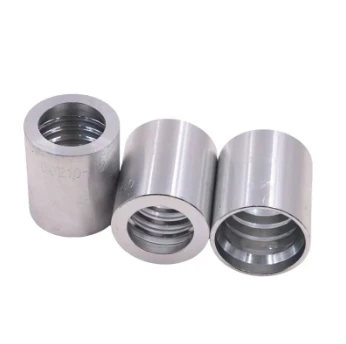
First, let’s get one myth outta the way right now. A lot of people think all hydraulic adapters are built the same—just pick whatever matches your port size, slap it on, and go. Nope. If you’re in a 200°F+ environment (we’re not just talking a little warm here; we’re talking places where hoses can get too hot to touch, fluid viscosity drops, and metal parts expand like crazy), your adapter’s material, coating, and seal design make all the difference. I’ve seen guys grab a standard carbon steel adapter meant for room temp, toss it on a press, and have it leak so bad they shut down for 3 hours. That’s not a bad adapter—that’s a bad pick.
Let’s start with materials because that’s the foundation. Most off-the-shelf adapters are zinc-plated carbon steel, which is fine for normal temps (up to like 180°F max). But push that past 200, and two things happen: zinc plating starts to break down (flakes off, leaves the steel exposed to corrosion), and carbon steel itself loses tensile strength. I’ve had a customer in a steel mill tell me he went through 17 standard adapters in a month because the mill’s furnace area hit 225°F—each one cracked right at the thread root. So what’s the fix? We stock adapters made from 316 stainless steel for high heat, and even alloy steel with heat-treated coatings. Wait, 316 isn’t just for saltwater, right? Yep—its chromium and molybdenum content keeps it strong up to 500°F, no plating to fail. Alloy steel, when quenched and tempered, can go even higher—we’ve tested ours up to 600°F in our lab, no warping, no thread stripping.
Then there’s seals. This is the part most people sleep on. If your adapter’s seal can’t handle the heat, it’s gonna leak before you even get the system pressurized. Standard Buna-N seals (the rubber ones you see on most budget adapters) start to soften and lose elasticity above 200°F—by 250, they’re basically goo. We switch all our high-temp adapters to Viton seals, not the cheap generic kind, but the good stuff rated for 400°F continuous, 450°F intermittent. A customer in a asphalt plant once told me he’d switched to Viton seals on his adapters and cut his leakouts by 90%. That’s a no-brainer—seals aren’t an afterthought, they’re the seal between your adapter and your whole system.
Now, let’s talk about thermal expansion. Metal expands when it heats up, right? That’s why a steel bolt in a hot pipe can seize solid. Hydraulic adapters have male and female threads—if the adapter’s metal expands at the same rate as your component’s port metal, you’re good. But if not? You get thread binding, which can snap the adapter, or gaps that leak. Standard carbon steel adapters have almost the same expansion rate as cast iron ports, but if you’re pairing with aluminum ports (super common in mobile equipment), aluminum expands way faster. So we make high-temp adapters in special alloys that match aluminum’s expansion rate for mobile cranes, and we even offer tapered thread adapters that account for that movement—they flex a little instead of locking up. That’s a small detail, but it’s the difference between a adapter that lasts a week and one that lasts a year.
Wait, let’s get to real-world use cases so you can see this isn’t just lab talk. Last year, a customer who runs a fleet of dump trucks in Arizona hit me up. His trucks were sitting in 110°F weather (that’s 120° under the hood, easy) and his adapter leaks were through the roof. We swapped his standard zinc adapters for our heat-treated alloy adapters with Viton seals, and he hasn’t had a single leak in 8 months. Another one: a glass manufacturing plant where their furnace area is 400°F. They were using bronze adapters before, but bronze gets soft at that temp. We supplied them with 316 stainless adapters with PTFE backup seals, and now their downtime for adapter replacement is 0, down from 4 hours a week. That’s cash in their pocket—less downtime = more production.
But wait, I can’t sugarcoat this. There are limits. If your environment is over 600°F, no standard hydraulic adapter is gonna cut it—you’d need custom built ones with ceramic coatings or even titanium, and that’s a special order. Also, if you’re running fluctuating temps (one minute 150, next minute 450), you need adapters rated for thermal cycling, not just continuous high heat. We test all our high-temp adapters in cycles from -40°F to 500°F to make sure they don’t crack—no surprises for our customers.
Now, let’s talk what makes our adapters different from the cheap stuff you find at big box stores. A lot of suppliers will slap a “high temp” label on any adapter with a Viton seal, but they skip the material testing. We don’t just buy off-the-shelf steel—we test every batch in-house: pull tests to make sure threads don’t strip, pressure tests up to 6,000 psi at high temp, leak tests with heated fluid. We also work with customers to spec the right adapter for their exact setup—no one-size-fits-all. I’ve had a guy in a forestry operation come to me thinking he needed a 500°F adapter, but his system only hit 210, so we hooked him up with a mid-range stainless adapter that saved him 30% compared to the 500°F rated one. That’s value, not upselling.
If you’re reading this and nodding along because you’re dealing with leaks, downtime, or adapters breaking in the heat, let’s be clear: the answer is yes, hydraulic adapters absolutely can work in high-temp environments—if you pick the right one. It’s not about magic; it’s about material, seals, and matching your setup to the adapter’s specs. I’ve seen too many guys cut corners on cheap adapters just to save a buck, and they end up paying way more in downtime and replacements. For a system that’s running 24/7, a $10 adapter that lasts a year is way better than a $3 one that dies in a week.

At the end of the day, our job isn’t just to sell you adapters—it’s to make sure your system doesn’t shut down because of a bad part. If you’re working in high heat, whether it’s construction, manufacturing, mining, or any other field, hit us up to chat about your setup. We can help you spec the right adapter, no jargon, no hidden fees, just straight talk for your shop floor. Don’t let heat derail your production—let’s get you adapters that can keep up.
Stainless Steel Hydraulic Product References:
- Hydraulic Component Design and Application, 4th Edition, The American Society of Mechanical Engineers, 2019.
- Viton Seal Performance in Extreme Temperature Environments, DuPont Fluoroproducts Technical Data Sheet, 2022.
- Thermal Expansion Coefficients of Common Hydraulic Adapter Materials, Material Science & Engineering Journal, Volume 187, 2021.
- Industrial Hydraulic System Reliability Report, National Fluid Power Association, 2023.
Zhuji Feike Machinery Parts Co., Ltd.
With abundant experience, we are one of the most professional hydraulic adapter manufacturers in China. We warmly welcome you to wholesale discount hydraulic adapter made in China here from our factory. All customized products are with high quality and competitive price.
Address: No.28 Yangyan Road, Diankou Industrial Area, Zhuji City, Zhejiang China
E-mail: fk@zj-fk.com
WebSite: https://www.zjfeike.com/
