Hey everyone! If you’ve ever worked in a industrial plant, chemical facility, or even a mining site, you’ve probably seen those heavy, metal doors that look like they could withstand way more than just a regular door. Those are explosion proof doors, right? And one question I get asked all the time is: “What’s their fire rating?” Explosion Proof Door
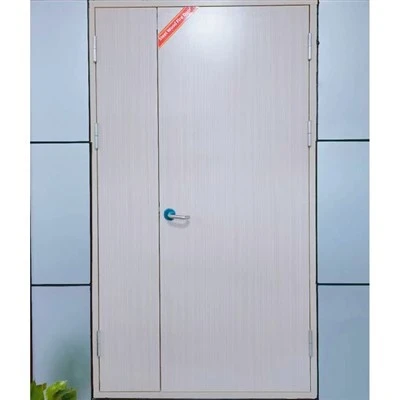
Full transparency—this isn’t a one-size-fits-all answer, and if you’re shopping for these doors (which, let’s be real, you only do when safety is non-negotiable), you can’t just grab a door off a shelf and assume it’ll cover both blast and fire. As a guy who’s been supplying explosion proof doors for over a decade now, I’ve walked so many clients through this confusion, so let’s break it down like we’re chatting over a coffee (no stuffy jargon, promise).
First, let’s make sure we’re on the same page here—explosion proof doors do two main jobs: they contain a blast from a sudden pressure event (like a gas leak igniting) and they act as a barrier to slow or stop fire from spreading. The fire rating part is super critical, because a blast doesn’t always come alone—once something explodes, fire is almost always right behind it. You don’t want your door failing halfway through a fire because it wasn’t built for heat, right?
Now, what actually is a fire rating? If you’ve ever bought a regular interior door, you’ve seen numbers like 20-minute or 90-minute fire ratings. That means the door can withstand being on the “exposed side” (the side where the fire is) for that exact amount of time before it either lets heat or flame through, or burns through entirely. For explosion proof doors, this is way stricter than standard fire doors, because they’re engineered for both blast pressure and heat at the same time—most regular fire doors can’t handle even a small blast, and most standard blast doors don’t have any fire resistance at all.
Let’s get into the actual numerical ratings, because that’s what everyone cares about. Here’s the thing: there’s no universal fire rating for all explosion proof doors. It all depends on two big factors: what industry you’re in, and what local codes you have to follow. I deal with clients in oil and gas, chemical processing, and power generation every week, so let’s use those as examples because those are the ones with the strictest rules.
For most basic explosion proof door applications—like smaller control rooms or storage areas where the blast risk is lower (think 5 to 10 psi of pressure)—we typically supply doors with a 1-hour fire rating. Wait, 1-hour? That’s not super high, right? But hold up—it’s not the same as a 1-hour fire rating for a home door. These doors are tested to hold up to 1 psi of blast pressure while also withstanding 1 hour of continuous heat at over 1,800 degrees Fahrenheit. That’s way hotter than a house fire, and they don’t warp, crack, or let heat seep through. I’ve seen clients test these doors on-site, and it’s wild—after the fire test, the other side of the door is still cool enough to touch without gloves.
But if you’re dealing with higher-risk areas—like a main process unit in a chemical plant, where a blast could hit 20 psi or more—you need a higher fire rating. For those, we go with 2-hour rated explosion proof doors. These are built with extra heavy-gauge steel, reinforced frames, and heat-resistant seals that don’t melt or break under pressure. A 2-hour rating here means they’ll hold up to that same massive blast (and even higher, depending on custom specs) while blocking fire for 2 full hours. Trust me, you don’t want to skimp here. I had a client a few years ago who tried to cut costs by going with a 1-hour door for a high-pressure processing area. When a small gas leak ignited, the blast didn’t blow the door off, but the door burned through in 45 minutes, and fire spread to an adjacent pump station. They ended up having to replace the whole unit, so lesson learned there.
Wait, also—there’s something called “blast-resistant fire doors” that people mix up with explosion proof doors, but they’re not the same. Explosion proof doors are specifically tested to meet two separate standards at the same time: one for blast resistance (usually IFC or NFPA standards, which I’ll get to in a sec) and one for fire resistance (ASTM E119, that’s the main fire test standard in the US). A lot of cheap knockoff doors will claim they’re both, but they only pass one test, not both. That’s why as a supplier, I always make sure every door leaves our shop with official third-party test reports. No exceptions.
Let’s talk about the standards, because this is where the fire rating is actually defined. The big one for fire testing here is ASTM E119. That’s the test that measures how long a door can resist flame and heat transmission. For explosion proof doors, when they say “1-hour fire rating,” that means they passed all the criteria of ASTM E119 for 60 minutes, plus they passed a blast pressure test along with it. Regular fire doors just do the ASTM E119 test, no blast part, so they don’t hold up during a real explosion.
Also, don’t forget about local codes. If you’re in the EU, they use EN 16034 for fire doors, and EN 13125 for blast-resistant doors. So if you work with international clients, you need doors that meet both US and EU standards. I’ve had to adjust orders multiple times for clients who have facilities in both Texas and Germany, and the fire ratings and testing requirements are slightly different, but as long as you specify exactly what code they need, we can make it work.
Another thing people ask me: do explosion proof doors ever have a 3-hour fire rating? Yeah, but those are super custom. They’re for the highest-risk areas, like explosion control rooms or vaults that hold flammable materials. These doors are basically built like small tanks—thick steel plates, multi-layered insulation, heavy-duty hinges and locks. A 3-hour rating here means they’ll survive a massive blast and block fire for 3 whole hours, which gives people time to evacuate and firefighters time to get there. We only make these for clients who have documented high-risk areas, because they’re way more expensive and take longer to build, but sometimes they’re non-negotiable.
Wait, also—seals matter a lot for fire rating. If the door’s seals are cheap, they’ll melt during a fire, and that’s where flame and heat will sneak through. Good explosion proof doors have intumescent seals. Those seals expand when they get hot, so they plug any gaps between the door and the frame, keeping fire and smoke from getting through. I see a lot of suppliers cut corners here, using regular rubber seals that burn right through, but that’s a recipe for disaster. All our doors use tested intumescent seals that work for their entire fire rating period.
Let me give you a real example to make this concrete. Last year, we supplied a set of 1-hour rated explosion proof doors to a mid-sized oil refinery in Louisiana. Their control room was adjacent to a gas processing unit, so the blast risk was around 8 psi, which is moderate. The doors had to meet NFPA 70E (that’s the standard for electrical safety in the workplace) and ASTM E119. We ran the full test package at a third-party lab: first, they applied 8 psi of blast pressure, making sure the door didn’t budge, didn’t dent, didn’t let any pressure through. Then, they subjected the door to 1,800-degree heat for 60 minutes. When they were done, the exposed side of the door was blackened, but the unexposed side was only 120 degrees Fahrenheit—cool enough to touch with a work glove, no problem. That’s the kind of performance you expect from a properly rated door.
Now, here’s the thing about misinformation: I see so many blogs and suppliers online saying explosion proof doors have a generic fire rating, like 2 hours. That’s not true. It’s all tied to your specific use case. If you’re in a low-risk storage area, a 30-minute fire rating (wait, yeah, some low-risk doors have that!) is enough. Those are for small areas where the blast risk is super low, so you don’t need a full 1-hour rating. But you have to tell your supplier exactly what your risk level is, otherwise you could be overpaying for a higher rating than you need, or underpaying for one that’s too low.
Also, don’t forget maintenance. A door with a 1-hour fire rating today isn’t going to last forever. If you don’t lubricate the hinges, check the seals, and inspect the door regularly, the rating can drop. I always remind clients that even the best door needs to be tested every 5 years to make sure it’s still up to code. We offer maintenance checks too, just to make sure our doors are performing as they should.
If you’re still confused about what fire rating you need, here’s a quick cheat sheet I give all new clients:
- Low risk (small storage, low-pressure areas): 30-minute fire rating
- Moderate risk (control rooms, medium-pressure processing): 1-hour fire rating
- High risk (main process units, high-pressure blast zones): 2-hour fire rating
- Extreme risk (explosion vaults, critical control centers): 3-hour fire rating
But again, this is just a general guide. The only way to know for sure is to check your local code (OSHA in the US, HSE in the UK, etc.) and work with a supplier who knows the industry. As someone who’s been in this game for years, I can tell you that cutting corners on this part is never worth it. I’ve seen too many close calls where a door’s fire rating wasn’t adequate, and the results were bad.
At the end of the day, the fire rating of an explosion proof door is a mix of design, testing, and your specific risk needs. It’s not a number you can pull out of thin air—it has to be backed by actual lab tests that measure both blast and fire performance. If a supplier can’t give you official test reports for the rating they’re quoting, run the other way. That’s a red flag.
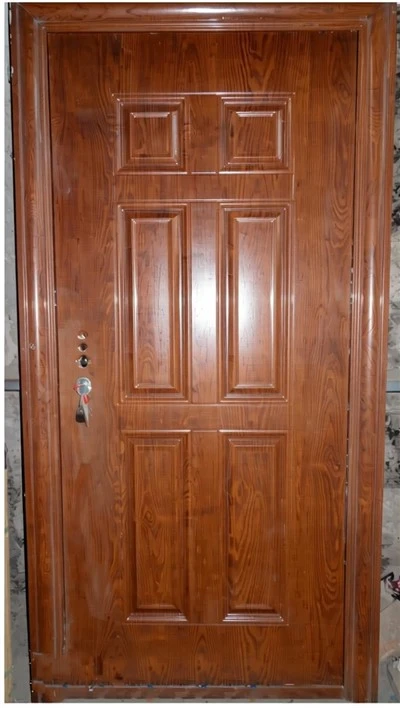
If you’re in the market for an explosion proof door and want to make sure you get the right fire rating for your facility, hit us up for a consultation. We’ll walk through your space, your risk levels, and the local codes you have to follow, and give you a transparent quote with all the test details. No pressure, no confusing jargon, just straight answers about what will keep your team and your facility safe. Don’t leave something as critical as this to chance—reach out today to get started.
Rolling Shutter Door References:
National Fire Protection Association (NFPA 70)
American Society for Testing and Materials (ASTM E119)
International Code Council (IFC)
Occupational Safety and Health Administration (OSHA)
Health and Safety Executive (HSE) UK
Hebei Hong’an Fire Door Co. Ltd.
Hebei Hong’an Fire Door Co., Ltd. is one of the most professional explosion proof door manufacturers and suppliers in China, featured by quality products and low price. Please rest assured to wholesale advanced explosion proof door made in China here from our factory. Customized orders are welcome.
Address: Bianbian Industrial Zone, Hejian City, Cangzhou City, Hebei Province, China
E-mail: hongandoor@outlook.com
WebSite: https://www.honganfd.com/
