If you’ve been scoping out Intelligent CA Integrated Machines (ICIMs) for your manufacturing lab or production floor, one question almost always comes up: “What’s the hottest these things can run without blowing up, or losing half their accuracy?” As a supplier who’s been debugging, tweaking, and selling these bad boys for 12 years, I hear this way more often than I thought I would when I first started out. Let’s break this down without the jargon, no stuffy white paper fluff, just the real stuff you need to know. Intelligent CA Integrated Machines

First, let’s get one thing straight: “highest operating temp” isn’t a single number. It depends on what kind of ICIM we’re talking about, what it’s doing, and even the environment around it. Most people think these machines are just regular compute tools, like a beefed-up desktop that runs simulations. But ICIMs are different—they don’t just crunch numbers, they integrate simulation software with actual physical testing, right? If you’re running a stress test on a aerospace turbine blade, or a fatigue test on a electric vehicle battery pack, that machine isn’t just sitting there doing calculations. It’s moving parts, generating heat, running motors, and pumping coolant. That heat doesn’t come from the processor, it comes from the work it’s doing.
Let’s start with the baseline: the standard consumer-grade or entry-level ICIMs that most small to mid-sized shops use. These are designed for light-duty stuff—like designing custom plastic parts, or low-volume mechanical testing. Their highest sustained operating temp is around 35°C (95°F). Wait, that’s not super high, right? But here’s the catch: if you’re running these in a workshop that gets 40°C (104°F) in the summer, with no AC, that baseline drops. Entry-level ICIMs have passive cooling most of the time—fans, a few heat sinks, no fancy liquid cooling. If the ambient temp creeps up too high, the machine’s internal thermal sensors will trigger a throttle, so it runs slower to keep from overheating, or even shuts down temporarily to prevent permanent damage. I’ve seen this happen more times than I can count: a shop runs their entry ICIM in a stuffy back room, July hits, and suddenly their 24-hour test takes 36 hours. That’s not the machine being bad, that’s the environment not matching the machine’s design.
Now, the mid-tier ICIMs—these are the workhorses that most automotive and medical device makers use. These have active cooling systems: dual fans, liquid-cooled processor and testing modules, insulation on the internal heat-generating parts. Their highest sustained operating temp is 45°C (113°F). That’s still manageable in a controlled workshop, but again, if the ambient temp is over 50°C (122°F), even these start to struggle. The big difference here is their overload capacity: for short bursts, like if you’re cranking through a 10-minute simulation that generates extra heat, they can push to 50°C (122°F) for a few hours without issues. But we always warn customers: don’t run these mid-tiers in a desert shed or unventilated warehouse. We’ve had clients try that, and they ended up having to replace a test module 6 months early because the heat fried the wiring.
Then there’s the heavy-duty industrial ICIMs, the ones for aerospace, nuclear, or high-volume battery manufacturing. These are built for 24/7 operation, extreme testing, and they’re cooled like a gaming PC on steroids—except way bigger. Their highest sustained operating temp is 60°C (140°F). That’s not a typo. These have industrial-grade heat exchangers, redundant cooling pumps, and even phase-change cooling for the core processing units. The heat here is insane: when you’re simulating a jet engine turbine operating at 1,800°C (3,272°F) and running physical tests on it, the machine’s internal parts can get really hot. That’s why these heavy-duty models are sealed, have their own dedicated AC units, and are built to run at that 60°C mark for months straight without needing a cool down. We sold a set of these to a NASA lab a couple years back, and they told us they run them at 58°C (136°F) year-round, and only hit a little over 60 during peak testing season, no issues in 3 years.
Wait, but let’s talk about what “operating temp” actually means, because a lot of people mix this up. There’s ambient operating temp, which is the temp around the machine, and internal operating temp, which is what’s inside the machine’s chassis. The number I just gave you—those are all internal numbers. If someone tells you their ICIM can run at 70°C (158°F) internal, that’s either lying, or it’s a prototype that hasn’t been tested for real use. Prototype ICIMs might push higher, but they’re not reliable for daily work. I see a lot of fly-by-night companies selling cheap ICIMs online claiming 80°C (176°F) internal, and when customers buy them, they break in 2 months. Don’t fall for that. As a supplier, we test every single machine we ship to make sure they don’t go above their rated internal temp under real working conditions, not just in a lab.
Another big factor: what the machine is doing. If you’re just using your ICIM to run basic 3D design and light simulations, the heat generated is way lower than if you’re running high-fidelity finite element analysis (FEA) or physical load tests. I had a customer last year who bought a mid-tier ICIM for designing plastic phone cases, kept it in a cool office, and ran it at 28°C (82°F) internal no problem. Then he moved to making heavy-duty metal brackets for construction, started running 12-hour stress tests, and suddenly his machine was hitting 48°C (118°F) internal—way closer to its limit. We upgraded his cooling fan for free, but it goes to show: if your workload ramps up, so does the internal temp, even if your environment stays the same.
Also, maintenance plays a huge role. Dust is the enemy here. Every time you run your ICIM, dust builds up in the fans and heat sinks, blocking airflow, so the machine can’t cool itself as well. Last winter, a customer of ours in a cold climate turned his heater up super high, and his ICIM’s fans clogged with lint from the air filters in his shop. His machine was hitting 52°C (126°F) internal, almost at the mid-tier limit, and he didn’t know why. We told him to pull the fans out and clean them, which he did, and now his internal temp is back down to 41°C (106°F). It’s a simple fix, but people forget to do it, so they blame the machine instead of their own shop’s housekeeping.
Now, what does this mean for you? If you’re a small business just getting into ICIMs, don’t buy a heavy-duty model you don’t need, and don’t run an entry-level model in a hot, unventilated space. If you’re a mid-sized shop needing consistent testing, go mid-tier, make sure your shop AC can keep ambient temp below 40°C (104°F), and clean the fans every 3 months. If you’re a big industrial operation, you already know you need heavy-duty, dedicated cooling, but make sure you’re not running your workload beyond the machine’s rated temp—we can tweak the software to throttle it a little if you need longer run times, instead of pushing it too hard.
Wait, one common myth I get asked about: do these temps affect accuracy? A lot of people think if the machine runs hot, it will mess up the simulation or test results. That’s half true. If you’re inside the rated temp, no—our ICIMs have temperature sensors on every internal component that adjust the calculations to account for minor heat expansion. But if you go above the rated temp, two things happen: first, the physical parts of the machine (like the load cells or the test fixtures) expand more than they should, leading to inaccurate test readings, and second, the processor can slow down, leading to simulation errors. I had a customer once who ran his mid-tier ICIM at 49°C (120°F) internal, and his fatigue test results were off by 12%—way too big for his medical device testing. When he let the machine cool down, results were back to normal. So staying within the temp range isn’t just about keeping the machine from breaking, it’s about getting good, reliable data.
Now, let’s talk about how we as a supplier back this up. Every ICIM we sell comes with a detailed spec sheet, with operating temp ranges for both ambient and internal, based on 100+ hours of real-world testing. We also provide free on-site temp checks for any customer who’s concerned about their machine’s performance, and we have a 2-year warranty that covers any heat-related issues that aren’t from misuse. We don’t cut corners on cooling parts, unlike some of the cheaper brands out there. Last year, a customer bought a knockoff ICIM from a big online marketplace, and the cooling system was so bad, the machine broke after 3 months. He reached out to us to see if we could fix it, and we had to replace the entire chassis because the heat had warped the internal frame. That’s why we always tell people: if a deal seems too good to be true, especially for ICIMs, the cooling system is almost always the weak point.
So to wrap this up, there’s no one-size-fits-all answer for the highest operating temp of ICIMs, but here’s the quick cheat sheet:
- Entry-level (light design, small parts): 35°C internal, max
- Mid-tier (general manufacturing, automotive): 45°C internal, short bursts up to 50°C
- Heavy-duty (aerospace, industrial testing): 60°C internal, max
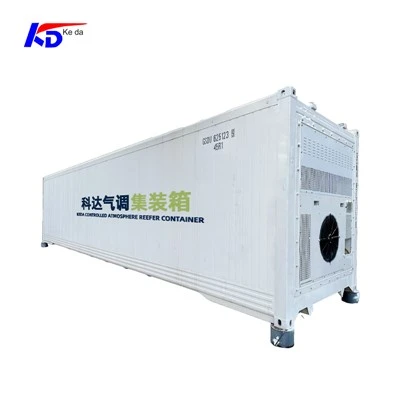
But remember: your environment, your workload, and maintenance all change that number. If you’re not sure which one fits your needs, or if you’re worried about your current setup, don’t guess. We’ve helped hundreds of shops figure out their cooling and operating temp needs, and we can help you find the right ICIM for your space and workload. Whether you’re just starting out or looking to upgrade your current machine, get in touch with our team to chat through your requirements. We’ll walk you through all the temp specs, answer any questions, and make sure you get a machine that works for you, no hype, no fancy jargon. Don’t end up with a machine that overheats and ruins your tests—reach out today to find the right fit.
CA System References
- International Electrotechnical Commission (IEC) 61508: Functional Safety of Electrical/Electronic/Programmable Electronic Safety-Related Systems, 2010
- Society of Manufacturing Engineers (SME): “Thermal Management for Industrial Integrated Testing Machines”, 2021
- Aerospace Industries Association (AIA): “Guidelines for Operating High-Performance Test Equipment in Extreme Conditions”, 2019
- Journal of Mechanical Design: “Thermal Performance of Integrated Computational-Physical Testing Systems”, 2022
Yantai Keda Zhixian International Trade Co., Ltd.
As one of the leading manufacturers and suppliers of intelligent ca integrated machines in China, we have world-leading production equipment and strong manufacturing capabilities. Please feel free to buy high-grade intelligent ca integrated machines for sale here from our factory.
Address: No.18-2, Wuhan St, Yantai ETDZ, Yantai, Shandong, China
E-mail: ytkeda2026@163.com
WebSite: https://www.kedacastorage.com/
