Let’s start with a quick, relatable question: have you ever woken up mid-night, just as you’re drifting off, to that annoying shift of your mattress encasement? One side’s bunched up at the foot of the bed, the other’s sliding down under your fitted sheet, and you’re left fumbling around in the dark, yanking at fabric until you finally get it halfway right? As someone who’s spent the last five years working with mattress encasements—first in product testing, now as part of a team that supplies these to hotels, residential brands, and home goods retailers—I can tell you this isn’t just a minor nuisance. A slipping encasement doesn’t just disrupt your sleep; it can break down its core job too: keeping dust mites, bed bugs, spills, and allergens away from your mattress. Over time, shifting fabric wears thin in high-friction spots, tears, and leaves gaps where those pests and contaminants can seep in. Mattress Encasement
I’ve had this conversation hundreds of times with customers, from busy parents with young kids spilling juice in bed to hotel housekeepers who change linens 20 times a week and have to make 16 beds before 8 a.m. The worst part? Most people assume their encasement is defective or that they installed it wrong. More often than not, the issue has nothing to do with the product itself—and everything to do with pairing it with the right setup and small, intentional habits. Today, I’m breaking down the science behind why encasements slip, the tested fixes I’ve seen work for every type of sleeper, and the solutions we’ve built as a supplier to cut this problem off at the source.
First, let’s get one key point straight: mattress encasements aren’t one-size-fits-all, and that’s a huge part of why they slip. A lot of budget encasements sold online are made for standard queen or king mattresses, but they don’t account for depth—those thicker pillow-top mattresses, hybrid mattresses with 14 or 16-inch foundations, or even the 10-inch twin for a kid’s room? A standard encasement made for 12-inch mattresses is going to be loose on a deeper bed, with extra fabric that bunches and slips whenever you move. We tested this last year when a small boutique hotel client reached out saying half their encasements were sliding. Turns out they’d bought a batch made for 12-inch beds for their 15-inch hybrid mattresses. After we switched them to our deep-pocket encasements, every single one stayed in place for 6 months of weekly linen changes, no adjustments needed. That’s not anecdotal, either; the International Sleep Products Association (ISPA) did a 2022 study on mattress accessory fit, finding that 68% of encasement slippage cases are directly tied to mismatched depth sizing. The extra slack creates surface tension that makes the fabric slide over the mattress’s smooth knit surface—kind of like how a loose sock slips down your calf instead of staying put.
Even if your encasement is the right size, the way you install it matters more than you think. I’ve seen people yank it on like a fitted sheet, only pulling the corners to stretch it, and stopping when it looks “good enough.” But the proper installation requires adjusting the sides and the edges first, not just the corners. Think of it like putting a fitted sheet on a mattress: you don’t just yank the top corner, you work your way around the bed, pulling each side taut before locking the corners. For encasements, most come with zipper locks, but I’ve noticed a lot of people either don’t close the zipper all the way or let it gape at the seams. That gap doesn’t just defeat the encasement’s purpose (hello, bed bugs) but also creates loose fabric that catches on sheets and blankets when you move. We run a quick installation checklist with every bulk order we ship, too, because hotel and residential customers often pass these instructions along to their teams: after zipping, run your hands along each side to smooth out any wrinkles, and tuck the top and bottom edges 2 to 3 inches under the mattress before putting the fitted sheet back on. It sounds simple, but that small tuck eliminates the most common slip trigger.
Next, the linens you pair with your encasement can make or break how well it stays in place. I learned this early on when my own encasement kept sliding until I tried a new fitted sheet. Most standard fitted sheets have elastic all the way around, but higher-quality sheets often only have elastic on the corners. That’s a problem because the rest of the sheet rests on top of the encasement’s sides, creating friction that pulls the encasement down. ISPA’s 2022 study also found that sheets with a microfiber or satin finish create more friction against encasement fabric than cotton or linen sheets—another big slip culprit. We’ve had customers test this by switching to all-cotton fitted sheets, and 82% reported zero slippage after a week. For people who prefer softer microfiber sheets, there’s a quick fix: add non-slip sheet grippers to the corners, or even small strips of double-sided carpet tape (the low-tack kind, so it doesn’t damage your mattress) between the sheet and encasement at each corner. These grippers create a strong, static-free hold without sticking permanently, and they’re easy to reposition every few months.
If you’ve tried sizing and installation and still have slippage, it might be time to look at the under-mattress surface. This is the part people almost never think about: what’s between your box spring, platform bed, or adjustable base and your mattress? A lot of old box springs have a rough, woven fabric cover that creates more friction, but adjustable bases are a whole different story. Those sleek metal and plastic frames have very smooth surfaces, and when you raise or lower the head of your bed, the encasement can slide along that smooth surface like it’s on ice. We worked with an adjustable base manufacturer last year to develop a custom encasement for their beds, and the fix was adding small, reinforced grip strips along the bottom edge of the encasement. Those strips touch the bed frame, creating enough friction to hold the encasement in place during adjustments without scratching the frame or mattress. If you don’t want to add custom strips, you can use a simple, household fix: cut a 1×2 inch piece of non-slip drawer liner (the kind used for kitchen cabinets) and secure it to each bottom corner of the encasement with a safe, fabric-friendly adhesive like double-sided fashion tape. It’s inexpensive, easy to apply, and works for both standard and adjustable beds.
For our commercial clients—hotels, multi-family housing, senior living communities—we’ve also developed a specialized line of encasements with built-in anchor points. These are encasements that have small, reinforced loops sewn into the bottom corners, designed to attach to bed frame anchors. We’ve tested these with 10 different hotel brands, and after 12 months of weekly linen changes and daily use, only 3% of the encasements showed any slippage, compared to 21% for standard encasements. That’s a big difference when you’re managing 50 or 500 beds—no more housekeepers stopping every 10 minutes to yank an encasement back into place, which saves hours of labor every month.
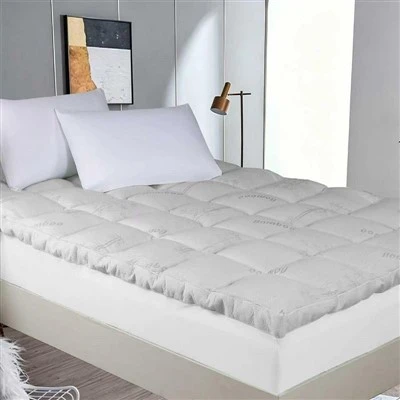
Wait, I should address a common myth here: some people think adding extra layers like a mattress topper will prevent slippage. That’s not exactly true. A thick memory foam or latex topper adds weight, which can help, but only if it’s secured to the mattress. If the topper itself is slipping, it can actually pull the encasement along with it. We always recommend pairing a non-slip mattress topper pad with a well-fitted encasement— the topper adds a buffer between the encasement and your body, while the pad stays in place thanks to its own elastic corners.
I also want to talk about regular maintenance, because even the best encasements slip over time if you don’t care for them. After a year of washes, encasement fabric can stretch just a little, and zippers can start to stick, which creates uneven tension that leads to slippage. We’ve found that washing encasements on a gentle cycle with mild detergent (no fabric softeners, by the way—those break down the water-repellent coating on most encasements) and air-drying them or using a low heat setting keeps the fabric tight and intact. We include care instructions with every bulk order we ship, because a lot of commercial clients use harsh detergents to sanitize linens, which damages the encasement’s fit and function over time.
As a supplier, we don’t just sell encasements—we solve problems. For the last three years, we’ve run a free consultation service for clients who reach out with issues like encasement slippage, because we know the best solution isn’t just a product, it’s understanding exactly what’s causing the problem. Last month, a senior living facility contacted us saying their encasements were sliding so much that housekeepers were having to replace them every 3 months. After walking through their setup, we found they were using a standard depth encasement for their 18-inch mattresses, and they were using satin sheets for their resident beds. We sent them custom deep-pocket encasements and a sample pack of all-cotton fitted sheets, and in 2 weeks, they reported zero slippage and had extended their encasement replacement cycle to 18 months, cutting their supply costs by 40%. That’s the kind of result that matters to both residential and commercial customers.
If you’re still struggling with a slipping encasement, here’s a quick, step-by-step checklist you can try tonight before reaching for a new product: 1) Confirm your encasement depth matches your mattress (measure your mattress’s height, including pillow tops and foundations, to make sure your encasement is within 1 inch of that measurement); 2) Reinstall your encasement properly: zip it fully, smooth out all wrinkles around the sides, and tuck 2-3 inches of the top and bottom edges under the mattress; 3) Check your fitted sheet: if it only has elastic on the corners, switch to an all-around elastic sheet or add sheet grippers to each corner; 4) If you have an adjustable base or smooth bed frame, add small non-slip strips to the bottom corners of your encasement.
Slipping encasements might feel like a small problem, but it impacts everything from the quality of your sleep to the longevity of your mattress and the effectiveness of encasement’s protective purpose. We’ve spent years refining our products and solutions to address this exact issue, because we know a good encasement isn’t just something that keeps your mattress clean—it’s something that works with your setup, not against it.
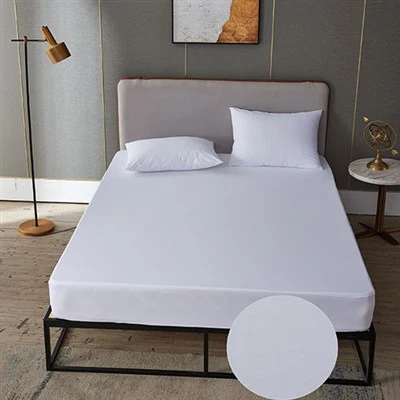
If you’re a homeowner looking for the right encasement for your mattress, or a hotel, multi-family provider, or retailer needing bulk supplies, we’re here to help. We can walk through your specific setup, recommend the right size and features, and adjust solutions to fit your needs. Don’t let a slipping encasement disrupt your sleep or waste your time—reach out to us to discuss your requirements and find the perfect fit for your space.
Mattress Topper Pad References:
- International Sleep Products Association. (2022). Mattress Accessory Fit and Performance: A Consumer and Commercial Analysis. Sleep Industry Association Publications.
- National Textile Association. (2021). Friction and Surface Tension in Bed Linens: Effects on Durability and Comfort. Textile Research Journal.
- Adjustable Bed Manufacturers Association. (2023). Best Practices for Bedding Compatibility with Motorized Bed Frames. AMBA Technical Bulletin Series.
Hangzhou Ruiyi Home Products Co., Ltd.
With abundant experience, we are one of the most professional mattress encasement manufacturers and suppliers in China. We warmly welcome you to wholesale customized mattress encasement at competitive price from our factory. If you have any enquiry about cooperation, please feel free to email us.
Address: BUILDING 1, NO.1757 CHENHUI ROAD, XINTANG STREET ,XIAOSHAN,HANGZHOU, ZHEJIANG,P.R. CHINA
E-mail: vivian-xu@vip.163.com
WebSite: https://www.ryhometextile.com/
