In the dynamic landscape of modern manufacturing, the integration of industrial robots with other manufacturing systems has emerged as a pivotal topic. As a supplier of industrial robots, I’ve witnessed firsthand the transformative potential that this integration holds for businesses across various sectors. This blog will delve into the feasibility, benefits, challenges, and real – world applications of integrating industrial robots with other manufacturing systems. Industrial Robots
Feasibility of Integration
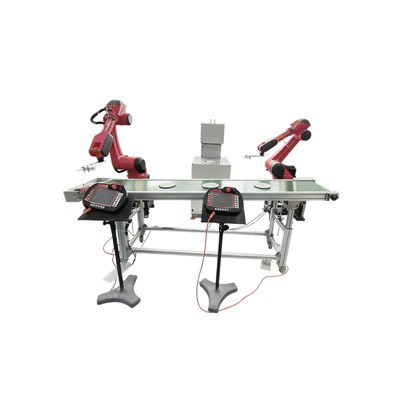
The technological advancements in recent years have made the integration of industrial robots with other manufacturing systems not only feasible but also increasingly accessible. Industrial robots are now equipped with advanced sensors, communication protocols, and programming capabilities that allow them to interact seamlessly with a wide range of manufacturing equipment.
For instance, the development of the Industrial Internet of Things (IIoT) has provided a robust framework for connecting industrial robots with other systems. Through IIoT, robots can exchange data in real – time with production lines, inventory management systems, and quality control equipment. This data exchange enables better coordination and optimization of manufacturing processes.
Moreover, the standardization of communication interfaces such as OPC UA (Open Platform Communications Unified Architecture) has further simplified the integration process. OPC UA allows different devices and systems to communicate with each other regardless of their manufacturer or underlying technology. This means that an industrial robot can be easily integrated with a conveyor belt system, a CNC machine, or a 3D printer, as long as they support the OPC UA protocol.
Benefits of Integration
Increased Productivity
One of the most significant benefits of integrating industrial robots with other manufacturing systems is the potential for increased productivity. When robots are integrated with production lines, they can perform tasks with high speed and precision, reducing cycle times and increasing throughput. For example, in an automotive manufacturing plant, robots can be integrated with assembly lines to perform tasks such as welding, painting, and part assembly. This not only speeds up the production process but also improves the quality of the final product.
Improved Quality Control
Integrating industrial robots with quality control systems can lead to significant improvements in product quality. Robots can be equipped with sensors and cameras to inspect products for defects in real – time. This data can be shared with the quality control system, which can then make decisions on whether to accept or reject a product. By catching defects early in the production process, manufacturers can reduce waste and improve customer satisfaction.
Enhanced Flexibility
In today’s market, manufacturers need to be able to quickly adapt to changing customer demands. Integrating industrial robots with other manufacturing systems provides greater flexibility in production. Robots can be easily reprogrammed to perform different tasks, allowing manufacturers to switch between different product lines or customize products according to customer specifications. For example, in a furniture manufacturing plant, robots can be used to cut, sand, and assemble different types of furniture based on customer orders.
Cost Savings
Over the long term, integrating industrial robots with other manufacturing systems can lead to significant cost savings. By automating repetitive tasks, manufacturers can reduce labor costs and improve efficiency. Additionally, the improved quality control and reduced waste can also result in cost savings. For example, in a food processing plant, robots can be used to sort and package products, reducing the need for manual labor and minimizing product waste.
Challenges of Integration
While the integration of industrial robots with other manufacturing systems offers numerous benefits, it also presents several challenges.
Technical Complexity
Integrating different systems requires a high level of technical expertise. Each system may have its own unique communication protocols, programming languages, and hardware requirements. Ensuring that these systems can communicate effectively with each other can be a complex and time – consuming process. For example, integrating a robot with a legacy manufacturing system may require significant modifications to the existing infrastructure.
Compatibility Issues
Compatibility between different systems can be a major challenge. Not all industrial robots and manufacturing systems are designed to work together. Differences in hardware, software, and communication protocols can make it difficult to integrate these systems. For example, a robot from one manufacturer may not be compatible with a conveyor belt system from another manufacturer.
Security Concerns
As industrial robots become more connected to other manufacturing systems, security becomes a major concern. The integration of these systems creates new vulnerabilities that can be exploited by hackers. Protecting sensitive data and ensuring the integrity of the manufacturing process is crucial. For example, a cyber – attack on an industrial robot could disrupt the production process, leading to significant losses for the manufacturer.
Real – World Applications
Automotive Industry
In the automotive industry, the integration of industrial robots with other manufacturing systems is widespread. Robots are used in assembly lines to perform tasks such as welding, painting, and assembly. These robots are integrated with conveyor belts, automated guided vehicles (AGVs), and quality control systems. For example, in a car manufacturing plant, robots can be programmed to weld car bodies together, while AGVs transport parts between different stations. The quality control system can then inspect the welded parts to ensure that they meet the required standards.
Electronics Industry
In the electronics industry, industrial robots are integrated with pick – and – place machines, surface – mount technology (SMT) lines, and testing equipment. Robots can be used to pick and place components on printed circuit boards (PCBs), ensuring high precision and accuracy. The SMT lines can then solder the components onto the PCBs, while the testing equipment can verify the functionality of the PCBs. This integration improves the efficiency and quality of the electronics manufacturing process.
Food and Beverage Industry
In the food and beverage industry, industrial robots are integrated with packaging machines, sorting systems, and inventory management systems. Robots can be used to sort and package food products, ensuring consistent quality and quantity. The inventory management system can track the stock levels of raw materials and finished products, allowing for efficient production planning. For example, in a dairy processing plant, robots can be used to fill milk cartons, while the inventory management system can ensure that there is enough raw milk available for production.
Conclusion
In conclusion, the integration of industrial robots with other manufacturing systems is not only feasible but also offers numerous benefits in terms of productivity, quality control, flexibility, and cost savings. However, it also presents several challenges, including technical complexity, compatibility issues, and security concerns. Despite these challenges, the real – world applications of this integration in industries such as automotive, electronics, and food and beverage demonstrate its potential to transform the manufacturing landscape.
Stamping Robot As a supplier of industrial robots, I am committed to helping manufacturers overcome these challenges and realize the full potential of integrating industrial robots with other manufacturing systems. If you are interested in exploring how industrial robots can be integrated into your manufacturing processes, I encourage you to reach out to me for a detailed discussion and to start the procurement process.
References
- Lee, J., Bagheri, B., & Kao, H. A. (2015). A cyber – physical systems architecture for industry 4.0 – based manufacturing systems. Manufacturing Letters, 3, 18 – 23.
- Lu, Y. (2017). Industrial Internet of Things (IIoT): Challenges, opportunities, and directions. IEEE Internet of Things Journal, 4(5), 1738 – 1746.
- Schuh, G., & Weyrich, M. (2017). Industrie 4.0 – The new industrial revolution. In Handbook of industrial engineering (pp. 1473 – 1492). Springer, Cham.
Dongguan Chuanglida Intelligent Equipments Co., Ltd.
As one of the most professional industrial robots manufacturers and suppliers in China, we also support customized service. Please feel free to buy discount industrial robots in stock here from our factory. For price consultation, contact us.
Address: Room 201, Building 2, No. 61, Shachang 1st Road, Dalang Town, Dongguan City, Guangdong Province
E-mail: haoguangli001@outlook.com
WebSite: https://www.boruntestech.com/
